Showing posts with label Book. Show all posts

Monday, December 19, 2016

Book Review #100: Chanakya in Daily Life By Radhakrishnan Pillai

Title: Chanakya in Daily Life
Author: Radhakrishnan Pillai
Publishers: Rupa Publications India
Genre: Life Lessons/Motivational/Non-Fiction
Pages: 272 (Paperback)
Source: Advanced Review Copy from Publishers

Life is all about doing the right things in the right way. As the old adage puts it out “Knowledge is knowing a tomato is a fruit; Wisdom is not putting it into a fruit salad”. There is a clear idea of what to learn and what not to learn from vast amount of sources. But, what if you find everything in a book that is combined as a one stop solution for all those life lessons? The book “Chanakya in Daily Life” by Radhakrishnan Pillai would fill that gap. This book is all about differentiating between what is right and how to tread that path.

The blurb at the back cover of the book says “Life is unpredictable and full of challenges. One wrong step and everything can come crashing down. In such a scenario, one often wishes for a roadmap of life, but how is that possible?”

This book is a clear roadmap for all your doubts and worries ranging from personal, professional and family life. Taking example of an Indian guru, Chanakya and his ever popular work Arthashastra, author has come up with a book that can be read every day and for lifetime too. The book is broadly and rightly classified in to three different sections. The first part deals with the individual life and lesson that can be learnt and adopted in one’s personal life. The second part of the book deals with the professional life that teaches what one must do in their professional life. The third and final part of the book teaches the importance of a family life. Each part holds its importance and is equally connected to the other two. One cannot have a sounding personal life, but lacking professional or family life satisfaction. It is interdependent on each other and this book explains the best way of handling all these things diligently and in a profound way.

In the first part of the book, the author discusses the personal life of an individual. The ideas ranges from waking up at a certain time every day, daily ritual, exercise for the body and the mind, relaxation, developing tastes in music, inculcating the habit of reading, having a hobby that could become a profession one day, sleep duration, breaking and planning the day into productive hours, imparting the knowledge of astrology and up to what extent one can believe in  astrology, practicing meditation, food habits, financial goals, creative hobby, finding a guru, having a personal philosophy, etc.. Each chapter holds a valid point and a direction in which one can master these habits. Each chapter is explained by keeping a reference of Chanakya’s Arthashastra.

In the second part of the book, author discusses the professional aspects of an individual. This part mainly focuses on how one should behave and adopt a disciplined professional life. Author has discussed topics ranging from going to the workplace, pondering over the day to day task, preparing for the day in advance, developing the interpersonal skills, handling the team member and co-workers that has different mindset and thinking capacity than yourself, training people, daily documentation of work, developing the contacts in a working place, how to give a recognition for your sub-ordinate, what one must follow while appointing a manager, what one should do in case of work related travel and how one can adopt these leisure hours to productivity, how to plan for daily, weekly, monthly and yearly review meetings, and finally how one should plan for their retirement in advance. These lessons for sure are relevant even today. As per Chanakya’s reference in Arthashastra, each and individual lesson explained in this chapter would make a king wise and assertive in the long run. So does a common man when he adapts a tiny bit from these sections in to his personal life.

The final part of the book deals with the family life and its importance for an individual and how it is connected to the personal and professional life. The author discusses various facets of one’s family life and how Chanakya has prophesied in this Arthashastra regarding a King’s family life and how it is still relevant in present world scenario. This chapter begins with the duties of the householder and what best one can offer to his family at his abilities. What is the purpose of marriage and how one should treat his spouse, what are the advantages and disadvantages of sex that can impact a family life of a person, how one should take care of his family and provide basic necessities for his dependents.  How to educate their children, what is the best way to bring up their children, the power of family prayer. What are the lessons one can learn for being a good parent, why imparting the concept of charity to children should be encouraged, and how to give personal individual space for each family members. This part ends on a chapter of how to feel gratitude for whatever things we have obtained in this life from their family.

Overall, this book is not a regular one time read it and forget it affair. This book can be read again and again. You can start in any chapter and it still makes profound sense. A book that can be considered as a package of life lessons in all three important aspects of a human life. I would encourage readers to buy this book. This is definitely a collectible stuff.

Few famous Chanakya’s quote that are used in this book:

-       Education is the best friend. An educated person is respected everywhere. Education beats the beauty and the youth.
-       There is some self interest in every friendship. There is no friendship without self interest. This is bitter truth.
-       As soon as the fear approaches, attack and destroy it.
-       Once you start working on something, don’t be afraid of failure and don’t abandon it. People who work sincerely are the happiest.
-       Learn from the mistake of others, you can’t live long enough to make them all by yourselves.


My Rating:
5/5


Note: This book was given to me by the Publishers in exchange for an unbiased review.

Wednesday, November 16, 2016

Book Review #92: The Laughing Skull By Ruskin Bond

Title: The Laughing Skull
Author: Ruskin Bond
Publishers: Rupa Publications
Genre: Short Stories/Children’s stories
Pages: 112 (Paperbound)
Source: Review copy sent by Publisher

Ruskin Bond is a well acclaimed author and most loved children’s writer in India. Most of our childhood days have been filled with the stories of Ruskin Bond. His short stories with little added horror and humor have always been a fascinating experience for any children then and now. One would always wonder how Ruskin Bond manages to write such simple, joyous tales all the time. Each and every story that he has written is refreshing. Stories that are mild horror and filled with fragrant smell of nature makes anyone wants to read again and again.

This book is one of those books where you can just sit on a lazy day in your cozy chair and start rummaging through the pages and go nostalgic all over again. Frankly, I stopped reading children books a long time ago. But still, when I was approached by the publishers to review this book on my blog along with three other titles from Ruskin Bond (Which will be reviewed shortly), I couldn’t say no to it. This is Ruskin Bond. My whole childhood was filled with the tales I’ve heard, read from his books. I just enjoyed this book like I always enjoy any books from Ruskin Bond collection.

The Laughing Skull, though it is the title of the book, it is the first story. There are nearly over 30 such short stories. Some are little horror and some humor. Additionally, other stories which are of funny ghosts, stupid ghosts, scary ghosts and what not.

The Laughing Skull is a funny story of a Skull that the author received from his doctor nephew. He put that skull on a mantelpiece at his home. Slowly, he felt that he was being watched by this skull. Feeling little strange, author decided to put that skull in a cupboard. After few moments, the cupboard started shaking violently, and the skull just popped out of cupboard and started bouncing up and down. Feeling little scared, the author wraps this skull in a box and tries to send it back to his nephew and goes to post office to deliver it. Within minutes of dropping this box at the post office, the skull started chasing the author straight out of the box. Author then decides to put that skull inside a football and gave it to a school. Felt relieved for few days, author started to miss this skull. It was an odd feeling. So, he decides to search this skull and get it back to his home. In his quest, he goes to a fortune teller and was surprised to find his skull lying with him. With enough persuasions and monetary compensation, author was able to successfully retrieve his skull from that fortune teller and kept that skull on the same mantelpiece in his home and felt an odd relaxation that he has never felt before.

There are few other stories which we might have already heard off. Susanna’s Seven Husbands for example. This little tale of a vicious woman, who supposedly married seven times and directly or indirectly killed all of her seven husbands one by one. This was an interesting tale that was narrated by a servant to the author. This story was made as a Bollywood film under the title “7 Khoon Maaf”.

We also get to read stories that are paranormal. One such story is the story of two sisters and a single brother. Usha is the eldest among her siblings Binya and Suresh. This is a story when one day Usha decides to visit town nearby. She had to cross the deep forest from her home to get to the town on the other side for the essential purchases. But there was a strong rumor among the village that, the forest is haunted during the night. One day Usha went across the town to make purchases and while returning there was heavy downpour in the forest and she couldn’t able to cross the forest before dusk. She decides to take shelter in the abandoned house in the forest. During night, she hears strange voices as if someone is calling her. She found out that, it was her brother and sister who came finding her all the way from village. So, all three of them decides to stay till morning. During their stay they were hearing many haunted voices, people calling their names etc… Once it was dawn, they started to village. Usha hears a voice saying goodbye. She thinks it was her brother or sister. But both of them walked silently. Then all three of them again hears the same voice shouting goodbye, goodbye.

The book is full of such suspense filled stories. We also get to read few stories like two brothers story that is full of morale. Story about an idiot husband, vicious wife and a helpful ghost. Story about a haunted swimming pool. Story of a paranormal pillow, etc… It is quite fascinating to go back in the days when such simple stories were filled with enough horror, suspense and thrill. I had similar experience even now while reading this collection.

Overall, a definite guide to go back to those childhood days. Reminisce all those beautiful days where you just want to read Ruskin Bond all day under your blanket. I would highly recommend it for everyone. Live you childhood once again.

Note: A review copy of the book was given to me by the publishers in return for an honest review.

My Rating:

5/5

Wednesday, March 23, 2016

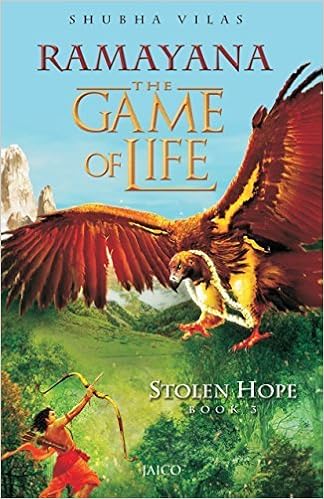
Book Review #81: Stolen Hope: Ramayana Series: Book #3: By Shubha Vilas

Title: The Stolen Hope (Book 3: Ramayana Series)
Author: Shubha Vilas
Publisher: Jaico Publishing
Genre: Mythology
Pages: 300+ (Paper bound)
Source: Review copy by the author


After receiving this book from the author for the review, I’ve thought for a while and purchased the first two books in the series (The Rise of the Sun Prince, and The Shattered Dreams) to get along with the plot and the subplots. Though as an Indian, I’ve known the entire story of the Ramayana and how it had happened by reading numerous books, this book series seems to be very specials regarding its authentic style of narration and the anecdotes, life lessons explained in every page of the book.

The book 1 explains about the birth and growth of the Rama as a toddler to a responsible scion. The book 2 explains the details about the decision of the King Dasharath to coronate Rama as the next king of Ayodhya, and the later events of Kaikeyi asking her two boons from the King Dasharatha resulting in the banishment of Rama to the exile for 14 years and Bharata to be made as a King of the Ayodhya, hence the dreams of the Dasharatha has shattered.

The book 3 begins from the story of the Dandakaranya where Rama, Sita and Lakshmana planned to spend their exile of 14 years. The journey of all three in the forest, their encounters with several rakshasas, and meeting several learned rishis like Agastya, and also the intervention of the Surpanakha and a small fun incident with her that turned out to be a major breakthrough in the story has been captured brilliantly by the author. The killing of Surpanakha’s cousins Khara and Dushana in an epic battle, and a beautiful narration of Rama meeting Shabari has been explained elegantly.

With a brief history of Ravana the story moves on stealthily and Rama is urged to go after the golden deer who is actually Maricha. Then Sita urges Lakshman to go after Rama despite of his unwillingness after hearing her husband's cry.

Ravana comes in form of sinister sage and he praises Ravana and belittle Rama, but Sita praises Rama instead which infuriates Ravana and he takes away Sita. Sita could only inform Jatayu about her abduction. Rama is informed about the abduction by dying Jatayu. Rama meets Shabri who tells them that only Vali can help him find Sita.

There is a short part of story from Lakshman's point of view too.

In-between the relay of the events, the author discusses and analyses certain acts of characters. For instance, at one place, Sita boldly reveals her mind to Rama about choosing the ascetic life instead of his bow and arrow, and immediately the next moment, she could not hold his gaze and begins to stare at her palms. That is, she feels guilty to have counselled Rama. Here the author discusses Sita's act of giving feedback as follows:

Does one have the right authority to give the feedback?
Even if one has the right authority, does one have the right motive to give a feedback?
Even if one has the right authority and motive, is it the right time, place and circumstance to give the feedback?

Although this story is written in parts, it doesn’t feel like it is limited to any particular storyline dividing the epic. The addition of little less important stories all along the way across the entire book has added much value as it would be very useful for the first time readers to obtain sufficient knowledge about the epic. The book is written in a gripping way that it is hard to keep it down, but it seems to be little bit lengthy as we tend to study each and every footnote at the bottom. But to a normal reader the footnotes would provide a Maslin of thoughts which will be forgivable for the length of the reading time.

This book is a must for the readers those who want to know about the Ramayana. Also the author has made this one to be a useful notes by sharing his wisdom and thoughts in every page. Further the summary of the books at the inception of the book makes it clear for the new readers that it’s not a must to read the other two initial books to get a clear view about this particular book.


My Rating:

5/5

Book Review #80: Shattered Dreams: Ramayana Series: Book #2: By Shubha Vilas

Title: The Shattered Dreams
Author: Shubha Vilas
Publisher: Jaico Publishing
Genre: Mythology
Pages: 250+ (Paper bound)
Source: Personal Copy

The first book in the series (The Rise of the Sun Prince) will end on a happy note of 12 years of successful marriage of Rama to Sita. They enjoy each and every day like never before. They were the true testimonial of how a married couple should behave towards each other. The book also explores further into the growing up Rama where he takes his responsibilities seriously and serves his elders with utmost respect. All days were passed without any deviations. People of Ayodhya were able to lead a peaceful and prosperous life until the King Dasharatha decides to coronate his son Rama as the next heir apparent of the Ayodhya.

The Shattered Dreams narrates the entire story of how the unblemished Rama was unfortunately awarded the exile of 14 years. How the deceitful Manthara was successfully able to brainwash Queen Kaikeyi by asking her to remember her two boons from Dasharatha that he had promised her long back.

The story in this book showcases the sacrifices made by many people including Rama who happily agreed to go to the forests for 14 years without even asking a single reason. He had respected his father Dasharatha’s words by every bit of it. Sacrifices made by Sita who readily asked Rama to take her to the forests along with her. Though she was never accustomed to the life of forests, she lived up to her name following the Dharma as a loyal wife of Rama. Apart from these, there is a radiant Lakshmana who accompanied Rama and Sita despite the strong protests from both. And lastly, we should never forget the sacrifice made by the wife of Laskmana’s wife Urmila. She readily agreed to stay back and look after her aged and widowed mother-in-law’s and wished all the success to her husband Lakshmana.

All said and done, the conduct of Bharata is worth to mention here. He readily disagrees with his mother Kaikeyi and repents for not being around in Ayodhya when all these things has happened without his knowledge. He ridicules his mother and tries all his might to get his beloved brother Rama back to Ayodhya. When Rama declined to the requests of Bharata, Bharata made sure that he also never steps in to Ayodhya. He constructed a small hut outside Ayodhya and placed Rama’s footwear on the throne and was ruling the kingdom on behalf of Rama.

Though we have grown up hearing this epic from various sources and watching many television series covering the same but after reading this book, one would definitely understands the real meaning of the tale and how it can be adopted to real life scenarios.

The footnotes and anecdotes in every page is the biggest plus point in this book. It adds a great value to the story. The notes are very educative, knowledgeable and a great source of quotes for those who are quote collectors. There are also great leadership and management lessons given under various circumstances. Two particular incidents worth to be mentioned on this aspects are the questions that Bharata asks himself whether he is eligible to rule the kingdom and the other scenario where Lakshmana asks himself whether he is allowed to advice Sita or Rama.

Overall, I have experienced a very new tale of Ramayana. Leaving its main plot as a known phenomenon, I have also had the fortune of reading many sub-plots and intricate details of the Ramayana. This book series is a must read to get a new perspective of how to look at things from a more broader perspective and definitely an eye opener towards myriad duties and responsibilities which we forget to value at times.

My Rating:

5/5

Tuesday, February 2, 2016

Book Review #79: Ramayana: The Game of Life – Book 1 – Rise of the Sun Prince

Title: Ramayana: The Game of Life – Book 1 – Rise of the Sun Prince
Author: Shubha Vilas
Publisher: Jaico Publishing House
Year: 2013
Genre: Hindu Scripture/Epics
Pages: 256 (Paperbound)
Source: Personal Copy

Ramayana is a story that has seeped into every soul of Hindustan. Ramayana is no longer a mere story to read and forget. There is so much to learn from these epics and can be easily adopted into our daily lives. Many books have come and gone, and each of those books adds a taste and personal viewpoint. As a reader, I feel fortunate enough to read many version of Ramayana.

Shubha Vilas has drawn inspiration from the original author of the Ramayana, Sage Valmiki and tried to present us a best possible version of the epic. The little anecdotes and footnotes explaining the real story and the interpretation of that particular event related to the modern day world is a good way of showing how Ramayana can be seen and adopted into our lives. Shubha Vilas has broken this epic in to a series of 5 books, of which, the first book which covers the birth of the protagonist of Ramayana, Lord Sri Rama.

This book mainly covers the Bala-Kanda of Ramayana i.e. the childhood days of Rama. But, the author puts it in a different way. As per this book, the Bala-Kanda refers to the days of sage Vishwamitra, the spiritual guru of Rama. The book entirely focuses on the birth origins of Rama and his brothers Lakshmana, Bharata and Shatrughna. Also, it covers how Vishwamitra became the celebrated Bramharshi after failing to seek revenge against his arch rival, the ever greatest sage, Bramharshi Vashishta.

The book has been written a lucid manner. Once you start reading it, you won’t feel like to stop it in midway. It keeps its readers hooked to the book. The book has been organized into main chapters and subchapters. Including the tale of Ramayana, the book also presents us with the many short stories that directly or indirectly linked to the Ramayana. One such stories is of Ahalya’s curse by her husband and Killing of the demons Maricha, Subhahu and Tadaka. The fascinating tale of how Vishwamitra became the revered Bramharshi by doing severe austerities and the sad story of Trishanku being held upside down for his lifetime in the heaven created by the sage Vishwamitra, etc… Each and every story happened outside the purview of Rama has been linked in one or the other way to Ramayana.

As the story keeps running further, we get the read the stories of how Rama and his brothers have grown up from being toddlers to infants to teenagers. As expected, we also read about Vishwamitra’s visit to Ayodhya to ask King Dasharatha to send his son Rama with him to achieve some predestined tasks.

The books ends on a happy note of the wedding proceedings of Rama with Sita. The stories of breaking the Bow by Rama and an encounter with his predecessor Parashurama will add a good factor to see Rama’s growth as a divine incarnation. Finally, the book ends when Dasharatha reeling from a nightmare decides to coronate Rama as his successor to the throne.

A nice start to this series. What’s more interesting from this book is the regular footnotes that you read at almost every page. The interpretation of the story or a particular event and how it can be juxtaposed to the modern day is a true testimonial of the author’s command over the Ramayana. If you are planning to read a condensed yet a riveting tale of the Ramayana, then you can begin with this book. I highly recommend this book.

My Rating:

5/5

Tuesday, September 15, 2015

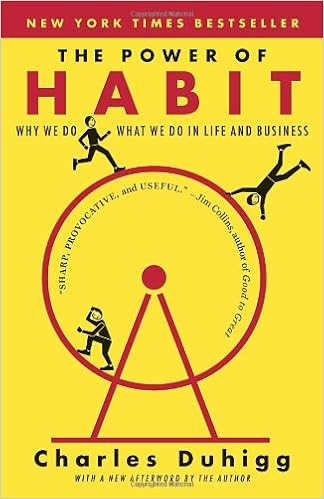
Book Review #77: The Power of Habit: Why we do, What we do in Life and Business By Charles Duhigg

Title: The Power of Habit – Why we do, what we do in Life and Business
Author: Charles Duhigg
Publishers: Random House
Year: 2012
Genre: Non-Fiction/Human Psychology
Source: Personal Copy

The book which explores the human habits and why it is called a habit after all. The author Charles Duhigg explains with various anecdotes from the scientific background, behavioral aspects and psychological aspects. The human habit is not something which will occur accidently, rather, it is a practiced phenomenon. This book explores this very idea of how the humans forms their habits, and the reason behind it and the inference of those habits.

This is an exceptionally written and researched book. It breaks those age old practices or the beliefs of "You can’t teach an old dog, new tricks”. Habits can be formed at any age and in any time, given, there is an enough room for acquiring the taste for it. This is really an important book and it can be used as a curriculum if you ask me. It has various examples from various cases studied for many years.

This book is mainly organized in to three different sections of habits. The habits of an individual person, the habits of an organization or a company and finally, the habits that propagates in a society that impacts the people on a larger scale. The case studies explained in every case is a testimonial of how the habits can truly become a game changer if we observe it closely. Thanks to the author. He has cleverly observed and recorded some events and cases where people can view a different angle of what the habits, why the habits and how the habits will occur and how to really change it!!

In the individual habits section, author had written an example of a person that was suffering from acute memory loss. This person went on to become famous as per those medical institutes that studied him over many years. This man was subjected to various experiments, practices and tests and recorded the results. A memory loss patient who cannot remember anything more than a minute or so, can truly practice some things repeatedly so that it can become his habits. A more of his case can be studied in the book.

In the organization example, Author had explained the cases of the famous toothpaste company Pepsodent and how this company went on to create a huge market for itself across the world, just by observing some habitual practices of people and changing the way it was marketed. People, who were not so confident about this product, has changed their minds and created a habit of brushing their teeth with Pepsodent. A more about this can be read in the book.

Finally, habits that changes the society. Author had used some of the famous examples from the American history to describe this section of the habits. The case of Montgomery bus boycott event has created a mass appeal among the people and it went on to create an important event in the history of America, drawing political personalities and other popular figures like Martin Luther King Jr. into the scenario. This case was explained brilliantly in the book and makes people to think about the habitual practice a society endorses. More about this can be read in the book.

All three section of habits draws a simple conclusion. The habits are formed in just a three step procedure. The “Cue”, the “Routine” and the “Reward”. Be it any habits like Smoking, Alcohol, Gambling, Marketing, Health care, etc... Etc… is formed in this three cycle of cue, routine and reward. For you to change any habits of yours and finding it difficult to break that cycle, Author had simply put in this amazing three sections to observe and change accordingly. Author has asked people or organization to not to change the Cue or the Reward. But, just change your Routines to achieve the same Reward. This is explained brilliantly in the following diagram.


A must read book for all those science enthusiasts. In fact, this book can be read by anyone who are in a dire need of changing their habits. It actually helps them to look deeply into their habitual routine and offers them to change a bit or two, so that, they can overcome those usual routines and achieve the same reward.

Few quotes from the book which I really liked:

“It is facile to imply that smoking, alcoholism, overeating, or other ingrained patters can be upended without real effort. Genuine change requires work and self-understanding of the cravings driving behaviors.”

“The Golden Rule of Habit Change: You can’t extinguish a bad habit, you can only change it.”

“…hiding what you know is sometimes as important as knowing it…”

“Rather, to change a habit, you must keep the old cue, and deliver the old reward, but insert a new routine.”

“This is the real power of habit: the insight that your habits are what you choose them to be.”


My Rating:
5/5

Monday, July 13, 2015

Book Review #73: Scion of Ikshvaku - Ramachandra Series Book 1

Title: Scion of Ikshvaku
Author: Amish Tripathi
Published Year: 2015
Publishers – Westland Publishers
Genre – Mythological Fiction
Pages – 350+ (Paperbound)
Source – Personal Copy

There are many version of Ramayana being told over the many centuries past and present, yet, whenever any new version of the tale is being foretold; it gives us altogether a new meaning and a new way of looking at our epic. This book by the well acclaimed author Amish Tripathi (The Shiva Trilogy famed) does scores some good points. This is a new, refreshing and brilliantly imagined novel. This is the first novel in this series and may be a couple more to follow. The humane version of the characters is a new thought. May be the author might have inspired from the other existing novels where these attempts have been made.

This is a fast paced book. The characters description is made well and each character were given its due space and credits. The protagonist Ram and the story behind his birth and background are imagined quite brilliantly. Whoever thinks that, the beloved Son of Dasharatha is actually hated by Dasharatha himself? (Spoilers alert). Well, to be able to digest these kind of new thinking requires a mind where we are not ought to juxtapose this novel with the actual epic where Ram and Dasharath has shared an unique camaraderie. The other stories regarding Rama’s brothers such as Lakshmana, Bharat, and Shatrughan are quite the same, except for the fact that, all their upbringing and childhood days are new thoughts and experimenting.

The plot setup in this novel is not the existing epic story. It is quite opposite to what we are so far believed as truly happened. The role of Guru Vashista in educating our protagonist and his brothers are quite an interesting section to read. It is believed that, the princes of any kingdom are not to reveal their true identity at their Gurukul. Hence, Ram and his brothers were learning in incognito and with different names than their actual given names.

As the book progresses further, we get to see the mastery of Amish in blending the current society problems with that of the Vedic period. Who can possibly imagine that, the gory incident of Delhi gang rape will find a place in this book? It is just brilliant and I was impressed at the sheer magnitude of Author’s brilliant work here.

Depicting Rishi Vishwamitra as a descendent of Naga clan and thereby connecting the story to his Shiva Trilogy is just awesome. The killing of the Rakshasas such as Subhahu, Tadaka and the way Ramchandra deals it in his own way is something unexpected. Kudos to the author!!

Sita Swayamvar is another section in the novel where the story takes it major twist and turns. The story behind the bow Pinaka (The Shiva-Dhanussu) is an interesting section to read. The Bees tower kind of city being imagined at the capital of Mithila city is truly an interesting point. Sita being the chief of Police in the Mithila Kingdom is another new aspect in the story. The humiliation faced by Ravana in the Swayamvar and the way it was dealt is pictured brilliantly. The Daivi-Astras from the Shiva Trilogy finds a place in this novel where Ram had to use it on the troops of Ravana though it is prohibited to use. Thereby, Ram imposes himself a punishment which I am not revealing it in this review as it contains spoilers!! (This is the stage where the next whole section of the story takes it turn).

There are few things which could be well avoided. For example, the story is being set in 3400 BCE and the metric system the author uses to measure distances in Kilometers!! Also, he often uses the country name as India where many characters discusses. I believe India is relatively a new term and he could’ve used either Bharat or Hindustan. Other than this, the novel is exceptionally good.

The rest of the novel can be read with ease and there are quite a bit of incidents where it is the pure imagination of the author’s work. One must read the book to understand it completely. I liked the book as it gives us a new, refreshing and, riveting story. I am sure, Amish lives up to the expectations that he had created in this first book from the series. I can't wait to read the sequel of this.

My Rating:

4.5/5

Tuesday, January 27, 2015

Book Review #58: A Different Life By Alice Taft

Title: A Different Life
Author: Alice Taft
Publisher: Austin Macauley Publishers Ltd.
ISBN: 9781849639064
Genre: Autobiography
Pages: 210
Source: Review Copy from Publishers

There is always a tough situation when you are reviewing an autobiography book. You can’t really judge the person and their story by merely reading 200 odd pages. It appears to be too judgmental when you sort of rate an autobiography. This becomes even more difficult when the autobiography you are reading is not a famous personality. That’s the exact situation I felt when I offered to review this book “A Different Life” by the publishers. This book is the story of a woman and her household and her entire journey from the age of 7 till the age of 60 plus.

The person, whom this book talks about, is a person who is living right next to our door. They might not be a celebrity, yet they make their life memorable in a way Alice Taft has made her life. I did really enjoy reading this book. She explained her simple life in a more simplistic way without hyping anything of that sort. She is not a big shot or a big business tycoon or even a TV personality. She is a woman that led a different life. Hence the title “A Different Life”

So, what makes the story of Alice Taft a different one? Well, to speak of everything, one must read this book to understand it better. Born in a bigger family with 11 odd siblings, for sure, she didn't have the best of the childhood that we can talk off. She faced numerous hurdles as early as possible. With such a large family, she and her other few siblings were forced to move to different houses where they could get a proper childhood. She survived her childhood in many houses. She worked in most of the unusual circumstances and yet she didn't let go of her spirit. In all these events, she made sure that, she kept in contact with her siblings, no matter where they stayed for the rest of their lives.

As she narrates her story in subsequent chapters, she did numerous odd jobs to stay alive. She worked as a cook; she worked as a baby sitter, etc… I think her life took a leap when she started to work in Royal Household of England. She made a career for herself by working in Royal Kitchen. She explained her tryst with cooking in the Royal Household in a greater detail. She explained the numerous occasions where she saw and interacted with the queen and appreciations she received from queen, etc…. She also didn't forget to mention her love interests and her date with few men who had taken interest in Alice.

She did mention her marriage, her loving husband and her charming kids etc… as far as her story is concerned, her husband Tony Taft has been a great support for her. Without his constant encouragement and support, she wouldn't have been able to build her career. She also mentions about her great friendship and talks good about her colleagues and her neighbors.  

Overall, I feel this book is a good read and you will come to know about Alice Taft. She is such a fine lady and I believe she lead a happy different life. Rating this book is somewhat injustice according to me. She is one in a million who lived and retired without becoming famous. But, this book gives a glimpse of Royal Kitchen and the food preferences of the Royal Household, and more than that, this book gives us firsthand information.

Monday, December 22, 2014

Book Review #51: Gruhabhanga By Dr. S.L. Bhyrappa

A book that is full of tragic events. A book that is full of emotions. A book that is full of family problems. A book that is full of foul language. Yet, this is a book that speaks about a woman. This is a book that speaks about the hurdles overcome by a strong woman. This is a book that speaks about what it takes to live life. Finally, this is a book that speaks about strong will.

Gruhabhanga is a stirring, emotional and tragic novel from my favorite author Dr. S.L. Bhyrappa. The title “Gruhabhanga” can be fairly translated to English as “Destruction of a house”. Well, this is a literal translation. The real meaning or the crux of the novel speaks about a household. It speaks about various people from this household and their little stories. This is one of the epitomes of Indian Novels. This novel has been made into a daily serial or popularly called as sitcoms. It was such a huge hit at that time and even today this book marks as the only few books that got translated into all Indian official languages. This novel was originally published in Kannada language.

The entire story of the novel takes place in somewhere between 1920’s till 1950’s spanning close to 30 to 35 years. Due to the backdrop of village in this story, this novel strikes a chord with its readers. The main theme of the novel can be considered as a mere family story. But, the stirring images of each and every character are what make it as a class apart.

The main protagonist of the novel is a woman called Nanjavva.  She was fairly educated girl and her father Kanthijoyeesa is a well learned Brahman. In one of the unfortunate events, Nanjavva will get married to a person called Chennigaraya. Chennigaraya had a mother Gangavva (A widow) and a younger brother Appannayya. Chennigaraya was a village revenue collector. His job was to collect the revenue from the farmers, counting the number of acres that each farmer is cultivating, and type of the crop they are cultivating and amount of the crops that they grow each year. He has to sum up all these calculations from across 40 other villages and should submit these records to a nearby government office. He will be given commission based on this records collection.

During Nanjavva’s initial marriage days, everything was going smooth and happy. In just few months, her mother-in-law Gangavva, a bad mouthed woman will unnecessarily interfere with the affairs of Nanajvva and Chennigaraya. This intrusion has become worse day by day as such, one day, Chennigaraya who is a momma’s boy, will start beating Nanjavva and he even stopped going to revenue collection. This was the turning point in this novel.

Having learnt all these things, Nanjavva decides to take care of her family. Now she is a mother of 3 children. She begins herself to go for revenue collection and she starts to write all the records and only she would get the signature from her husband. Few learned members from the village will be aiding Nanjavva in her quest towards raising her children. During all these years, Gangavva, the mother-in-law of Nanjavva will be badmouthing her and often tries to link up illicit relationship with other men in the village. These events made Chennigaraya to abandon Nanjavva forever.

Later part of the novel is simply mind blowing. Author SLB has made this Nanjavva a role model for all the working women out there. Nanajvva slowly build her identity in the village. She often begged for few days in order to feed her children. She stayed in racks of an old abandoned house and making leaf plates to make the meets end. By this time, her elder son Ramanna was about to finish his school and his elder daughter is the age of marriage. Due to the help of few kind hearted villagers, Nanjavva was able to conduct her daughter’s marriage in a simple ceremony to a school teacher Surya Narayana. Surya Narayana, who is a school teacher in a neighbor village, will inform Nanjavva that, he will find a house and then he will take his wife there. Till that time, Nanjavva’s elder daughter will stay at her mother’s house.

Here, the fate plays an unfortunate incident in Nanjavva’s life thorough the author’s imagination. The entire village was attacked by plague epidemic starting with her house. Unfortunately, both her elder son and elder daughter passed away on the same day in a span of 3 hours who was suffering from plague. This incident made Nanjavva to lose faith in god. Fearing the same death for her younger son, she sends him off to her brother’s house and starts to live alone.

Nanjavva had always dreamt of her own house in the village. She works very hard to save the required amount of money and buys an old house and she starts to reconstruct the house. But fate was planning something else for her. As soon as she finished the construction of her house, there was another tragedy that struck in this household through the death of Nanjavva herself. She was attacked by the same plague epidemic and now the entire novel takes it turn towards climax.

In all these events, Chennigaraya the good for nothing husband of Nanjavva was seen with no emotions at all. Brainwashed by his mom, he expresses no grief over the death of his wife or children. He didn’t even bother to check on his younger son who is staying at Nanjavva’s borther’s house. He ended up visiting prostitutes on a daily basis.

What happened to Nanjavva’s younger son? Was he living peacefully in his uncle’s house? To know the answer, one must read the book. I think there was no better climax given to this book than this.

The above synopsis seems very simple. But, the vivid story described in this book will make anyone weep while reading this novel. The choice of words seems very daring. Since, no other novelist was dared enough to write such foul language in any novel. These words include Bastard, Son of a Bitch, Fuck You; Fuck your mom, Slut, etc... Etc… as I said, this is a village backdrop story, hence, the foul words is an apt choice of expressing one’s anger or resentment.

Overall, I feel this novel will stand tall as one of the greatest novel ever written in the history of Indian literature. At the same time, this novel will make the readers understand about the cultural practices, traditions, caste systems of a 1930’s India. I recommend this book to be read by everyone. It’s like a once in a lifetime.

My Rating:
5/5

Thursday, December 4, 2014

Book Review #47: Bhitti - An Autobiography by Dr. S.L. Bhyrappa

I was not at all ready to write up a review for this book. This book, Bhitti is the autobiography of Dr. S.L. Bhyrappa, the ace novelist, the philosopher and a great human being. Bhitti is a Kannada language word. It can be translated to English as a WALL or a PORTRAIT, where one can post their picture. Evidently, this is an apt title for this book. He has written his life story as a picture on the wall. It is so thrilling and one will feel profound whilst reading this book. I am quite inspired by this book, at the same time; I was saddened by reading his life journey. For sure, Bhitti is a masterpiece narration and it stands as a lesson for those who are writing their autobiographies.

What made it more special about this book? It was the sheer brilliance of SLB sir and the way he narrated his account of life in this book. He has not crossed the limits of boundaries while describing events and not derided anyone who directly or indirectly was the cause of sabotaging his earlier childhood and his teen years.

He started his book by describing his childhood when he was aged 4. He went on describing the social status, surroundings, events, the neighbors, his family members, his relatives and most importantly his mother who played a crucial role in bringing up him in the righteous way. He also writes about his father who was good for nothing and describes him as an aloof. His father was directly responsible for all his miseries that he went through as a child. His mother was the sole responsible person in his family who was taking care of the daily needs of all the family members. He has grown up in a situation where there were not even proper meals to eat. His family often slept without eating anything except for his father who happened to be the revenue collector from the farmers around the village and he used to spend most of his earnings for his amusements like eating in hotels, travelling for days, etc…

He has written in detail about his early childhood, his teen years and his college days and till his retirement age that spanning over 70 years. He tells us a riveting story.  His great shock came in when his elder brother and sister who died on the same day in a span of 3 hours due to plague epidemic. This was literally a shock to young SLB. After this incident, his mother sent him to his brother’s house so that he can get a proper education. SLB describes his stay at his uncle’s house as one of the devastating years of his life. He literally became a slave for his uncle doing cattle work, temple cleaning during the day with little or no food till noon. Even here, life was cruel to him, he received a message from one of his villagers that, his mother too died of plague. He was barely 11 years old at that time.

He has given an account of his childhood and his young teen years in 2 of his novels “Grihabhanga” and “Anveshana”. The stirring images and characters from both of these novels is a true incident happened in the life of SLB. He had faced some of the brutal tortures by his uncle, his aunt and importantly from his father. So, he decides to run away from home and goes to a different town where he literally begged every day for food. In those times there was a concept called “VAARANNA” that means “WEEKLY FOOD”. This concept is not existed in recent times. But, this is a concept where a student that begs in each house will come to an agreement with them that, he will be given a day’s food. Like this, he arranged in 7 different houses that agreed him to provide food.

He was not agreeing with himself for begging during his teen years. So he does odd jobs during his school breaks to make the ends meet. He works in a small hotel as a cleaner and waiter, he sells incense sticks during evening, he even worked as a gatekeeper for a cinema hall, and he went to every village as a story teller and amuses the villagers by his story and accepts whatever the gifts the villagers will offer. By all this means he manages to complete his schooling. While describing these events, SLB never forgets to remember all those kind hearted teachers that helped him a lot in his education.

SLB has struggled in every walk of his life by managing to keep him alive and educated. With a “vagabond” father, his life should’ve been finished long ago. But, some divine force was keeping him alive all these years so that he can win the hearts of millions of people that he has won today.

Despite undergoing such hardships in his life, his quench for reading never stopped. He was reading almost anything. By the time he reached his 20’s, he might have read at least 200 odd books. That’s what made him a good story teller. With all the blessings from every good person that he met in his life, he went on to complete his M.A (Honors) in Philosophy and managed to stand out as a gold medalist in his final years. He has written his first novel Bheemakaaya when was just 18 years old!!

Very early in life he realizes the correctness of defeating an opposing view by logical and knowledgeable argument rather that brow beating it by raising the voice. This comes through in his books which are very well researched. We see his views on religion and rituals evolving, his philosophy of life taking root and the awakening and evolution of his creative genius. Tips for new writers are strewn throughout the book.

SLB has seen life from very close quarters and is very well travelled. He has travelled all across the globe (may be 3 times overall) not to mention large swathes of India. SLB writes as he preaches with a detached air but is forthright. He never hesitates in calling a spade a spade; we see this in him even as a young boy.  He has always stood up for truth and justice and is a fighter and a survivor. A survivor because all the bitterness, the pain and betrayal he has seen  would have broken the spirit of an ordinary human being but it has not made SLB cynical. He has internalized it all to reach great heights. The success and heights that SLB has attained is testimony to the triumph of the human spirit. The autobiography is written in a linear chronological manner. The language is succinct and the book gripping and not able to put it back.

What I feel is the childhood and his student days of SLB sir’s autobiography must be made mandatory for all the new generation kids for reading. They will realize the importance of education. They will get a new perspective in life and will develop a respect for their life, their education.

I feel very underage to judge the autobiography of a great human being. At the same time, I made a point clear in my mind that, whatever happens in life, I will fight it till the end. The silver lining is a birth right of every human being on this planet. I recommend this book to be read by everyone. I prostrate my head at the feet of SLB sir for giving me a lifetime treasure of books. What one can only imagine in their life is a fact from SLB sir’s books.  

My Rating:
5/5

Buy this Book from Flipkart.com:
KANNADA VERSION LINK

ENGLISH VERSION LINK

Friday, November 28, 2014

Book Review #46: Playing It My Way: My Autobiography By Sachin Tendulkar

Writing review to the well known facts is a bit overdoing the task!! But, let me tell you, I thoroughly enjoyed reading Paaji’s autobiography. With help of Boria Majumdar, Sachin has written excellently and given us a walkthrough of his life from the age of 11 till his retirement at the age of 41.

I don’t go over describing the events that unfolded in his life as a cricketer. We all know it better over the years by watching him play. What might be the takeaway from the book? Well, his determination. That’s all I can say. Having succumbed to hell lot of injuries, Sachin managed to play an illustrious career of 24 years. Started as a novice, ended as a Bharat Ratna!! Not an easy task to become the favorite of most of the Indians that loves cricket. Having born in the 80’s, he was my hero in my childhood and surprisingly my first bat that I was gifted by my dad had MRF sticker on it!!!

If we speak about the book, it speaks less about his childhood and more about his statistics. It has to be, doesn’t it? Started to play cricket at the age of 11 and within 5 years ended up in the national team is not an easy achievement. He never looked back from then on. He carried on with the same zeal in his entire career. Of course, there are some ups and downs, hiccups, disappointment, resentment, etc…but, nothing has stopped him going on.

He did mentioned some of the gray patches of his career and expressed his disappointments over few events that happened in his career as a player and as a member of team India. Particularly Greg Chapel being appointed as the coach of team India that made our team looks weaker than Bangladesh or even Kenya. He had openly criticized in his book about Greg and his cunning motives. On one occasion, where Greg meets Sachin in his house and asks him to take over the captainship from Rahul and even goes on telling him that, they both can rule the Indian team in the coming years. Having sensed all this, Sachin declined it out rightly and asked Greg to not bring this topic anymore. We will come to know many such stories of Greg and his “Hatke…” style of coaching India that resulted in damaging the team’s morale and spirit.

Sachin also mentions about few events where he wished things could’ve been little better. One such thing was Kapil Dev being appointed as the team’s coach that made no sense to him!! In one of the particular test match where he was not out on 194 short of 6 runs to his double hundred, that’s when Rahul had declared our innings!! This decision of Rahul had made Sachin furious for few days and even he stopped talking to Rahul for few days!! When Rahul tried to explain to him that, “It’s in the interest of team” Sachin was reluctant to listen to him and instead he made his point clear that “You could’ve have waited for 6 more runs”!!

He goes on explaining each and every tour he had made in his carrier and expressed his wish of becoming the world champion. Remember, Sachin has played in 5 world cup events since 1992 and couldn’t able to be on the triumphant side. He had to wait for his 6th world cup to witness this moment. Anyways, he had written in great care about all these events.

He carefully dodged few things regarding his captaincy, match fixing scandals, IPL spot fixing. He managed to brush few lines on these events. That’s expected according to me. He even avoided why his friendship with Vinod Kambli had taken turns in the years down the lane. He just managed to write few lines about his and signed it off saying; he is still friends with him.

He has written that he was super agitated when it came to his 100th international 100. This one particular hundred took almost a year and half to come into the fore. As a fan, I was disappointed that it came against Bangladesh!! :)

Enough said about his autobiography. It is certainly a must read book. Even though you are not a fan of Sachin (Duh!!), you will certainly witness few funny, sad, heated epic moments from his life as a Sachin – A Good Student of Cricket, Sachin - The Cricketer, Sachin – The Foodie, Sachin – The Shy Guy, Sachin – The Patriot, Sachin – The Proud Father, Sachin – A Responsible Son, Sachin – The Friendly Guy, Sachin – The Well Behaved Gentleman, Sachin – A Philanthropist and finally Sachin – The Epitome of Indian Cricket.

Overall a fantastic journey I must say. I was so engrossed while reading it; I finished reading it in flat 2 days :). There are nice photographs from his childhood, his trips, his marriage, etc… At the end of the book, you can see his complete career statistics, his runs, his hundreds, against which team, home and away runs etc…

Towards the end of the book, you can read his last speech that he gave at wankhede stadium thanking every single person that played a crucial role in building up his career, starting with his family members, his wife Anjali, importantly his childhood coach Ramakant Achrekar, his best friends, his significant others in the team like Sourav, Rahul, Laxman etc...He finished his book in style thanking his fans for all the support that they have given him in his career and mentioned that he will never forget the “SACHIN… SACHIN…” chant of his fans till his last breath!

My Rating:
5/5

Buy this book from FLIPKART.COM:

Monday, October 13, 2014

Book Review #42: Nirakarana By Dr. S.L. Bhyrappa

This is a short book that captures the rollercoaster ride of a man that stuck between family life and renunciation. Dr. S.L. Bhyrappa has marveled once again in this book. He has gone inside a man’s mind and written this novel as if he is narrating the story of that man’s life. “Nirakarana” can be translated to English as “Denial”.

The story seems to be very simple at the beginning. The protagonist of the novel, Narahari a moderately educated man, married twice, but both of his wives are dead long ago. Along with 5 kids from 2 wives, Narahari seems to have lost the capability to lead his life. He was struggling every day to take care of his kids with his low paying and overworking job. He is a stenographer in the leading English daily in the town.

So, he decides to give away his kids for adoption. He publishes an ad in his newspaper with the help of his editor. He decides to give away his kids for adoption for well settled families. He also decides that, he gives each kid to a different family. At times, he felt that he is doing something wrong. But, he gets this strong feel of guilt whenever he looked at his kids. He is not able to provide them the proper childhood that they've rightfully owned. Therefore, he decides not to waste a minute or two. Within 6 months of his publishing ad, he was approached by various families from different cities across the country. Within 1 year, he gave away all his kids for adoption to different families.

What follows later is a true mastery of art work by the author. Having got ridden of his kids, he decides to renounce his working life and decides to become a hermit. He informs his editor about his decision and leaves his city forever. Initially he wanders around many holy places and meets many sages and saints. He somehow started to like his way of learning the life and its oddities. He starts to learn meditation, at the same time he decides to go to the Himalayas. There, he meets a sage who wore nothing, spoke nothing and ate nothing but a potato for a day. He was attracted initially in this way of renouncing the world. He tries to follow in the footsteps of this sage, but he failed miserably to cope up with the hard way. He was no longer able to continue living life that way. He decides to head back to the city and seeks a warden job in a local orphanage. There he befriends the accountant of that orphanage and narrates his whole life with him.


As the story further progresses, this accountant friend of Narahari informs him that he will go and see the conditions of kids that Narahari had gave away. Once this accountant was back, Narahari learnt that, his kids are not leading a happy life after all, except for 2 kids. Surprisingly, this accountant had brought a kid along with himself and informs Narahari that, this kid is his son. He had brought this kid only to save kid’s miserable life in the adopted house. Initially, Narahari was not happy to see his kid coming back to him. Later, he starts to get a liking for this boy.

As the story approached towards the end, a young girl would come to this orphanage and with an instant she identifies Narahari as her father. What follows after their long discussions gives a complete picture of the novel. I stop it at this point; this much would be enough for a review!!

What I liked about the novel is its immense detailed presentation of the renounced life of Narahari. It is just not about Narahari, this story reminds us of the hard times that may come up life and how one should approach it instead of renouncing and get rid of our responsibilities. Difficulties, hardships are all part of life. One should not get dejected by it; rather, one should face it with more energy and try to bring out the solution. There’s always a silver lining in everyone’s life. 

My Rating:
4/5

Monday, October 6, 2014

Book Review #39: Tabbaliyu Neenade Magane By Dr. S.L. Bhyrappa

This book talks about the conflict between people who are traditionally grown up, holding up the age old rituals and cultural practices and with the people who are educated with the modern viewpoint of the world. So the story captures this essence of what is morally right and what is scientifically right.

 Author SL Bhyrappa is a true gift to the Kannada literary world. His tales varies from social issues till modern space science. He is the only author that doesn't conform to a specific genre. He writes on many themes and many beliefs. That’s what I liked about SL Bhyrappa Sir. He has surpassed his limits in this particular book ‘Tabbaliyu Neenade Magane’ which can be translated to English as ‘Son, You've become an orphan’.

 The story is very sensitive and controversial. It captures the theme of cow slaughtering versus cow protectors in a small fictitious village. An aged person Kalinge Gowda, who believes that cows are the representation of Gods that descended upon earth. Kalinge Gowda belongs to such a revered family, where a cow has offered herself to a hungry tiger willingly ages back. This cow is popularly called as ‘Punya Koti’. A breed which is believed to be sacred than all other cows. Kalinge Gowda has a grandson Kalinga, who was graduated in Agriculture from the University of USA. Kalinga has married to Hilda, a US citizen. Kalinga has a friend in his village, Venkatramana, a vedic scholar and a middle school teacher who believes in every traditional practices and rituals.

The entire villagers were against the slaughtering of the cows, whether it is aged old or a young one.  Hilda the wife of Kalinga was distracted initially to get adjusted to the villagers. She seems to have lost all her independent life of US after coming to this little village. She has to sacrifice her beef consumption. Married to an Indian man, she found it very hard to get adjusted. Kalinga who was very careful initially tries to win the heart of villagers and his friend Venkataramana. But to his dismay, in whichever way he tries to reconcile with the villagers, it was backfiring. One incident where Hilda killed a cow in her farm and ordered her cook to prepare beef, resulted in the severe repercussions from the villagers, which made Kaling to apologize in front of entire villagers.

The book has this kind of conflicting stories throughout. When Hilda questioned Venkataramana about the animal sacrifices juxtaposing it with the cow slaughtering, she won’t receive a convincing answer. All in all, Kalinga and Hilda felt that they were out casted from the village and felt lonely and rejected. All this made Kaling and Hilda to leave their village once and for all and go back to USA.

The climax part of the novel takes an unexpected turn and leaves it readers with surprise. I feel that’s the best part of the book. I will not reveal that in my review. It has to be read from the book itself. After reading the book, every reader will face with few questions that they couldn’t find answers. What is more important in a society? Upholding the age old practices and thereby respecting our culture and customs or compare every situation with the modern aspects and live according to them? Is banning cow slaughter solves every problem in India? Only time can answer.

My Rating:
5/5