Showing posts with label Kannada. Show all posts

Monday, February 6, 2017

Book Review #107: Brihat Karnataka: Bhaashika, Samskrutika By Dr. M. Chidananda Murthy

Title: Birhat Karnataka: Bhashika, Samskrutika (Greater Karnataka: Linguistic, Cultural)
Author: Dr. M. Chidananda Murty
Publishers: Sapna Book House
Genre: Linguistic Research/Non-Fiction
Pages: 344+ (Paperback)
Source: Personal Copy

This is the book that should be read by every Kannadiga out there. The book makes each Kannada speaking person proud of their culture, language and their history. The amount of research that went into this book is inexplicable. Dr. M. Chidananda Murthy, a great human being and a research scholar has painstakingly compiled this book after doing years of research and arranging it in a chronological order. I have always admired the author for his stands on the various issues apart from his writings. He is one of the highly respected personalities in Karnataka and in India.

Coming to the book, it is definitely not an easy read. Reading a research book requires great deal of patience and an open mind to accept the ideas put forth in the book. It is definitely not a fantasy tale. The book mainly captures the greater Karnataka that existed before the Independence of India and before the partition. As we go through the book, we will realize that what a great culture that we belong to. It is also imperative that none of the so called research scholars in present day have the zest to do this kind of research on their language and culture.

Greater Karnataka, as we speak of today, is not the Karnataka that we see in today’s map. It includes the whole part of Maharashtra, parts of Andhra Pradesh (including the Telangana) and parts of Tamil Nadu, Goa, and few parts from the Madhya Pradesh and to some extent Gujarat. Author has presented his research facts point by point. Thereby, giving us a clear picture of the boundaries of the greater Karnataka since 7th Century CE. We will come across many examples ranging from the languages that we use in present day Karnataka and the language that became an influence for the Maharashtra, Andhra Pradesh, Goa etc… during yester years.

Quoting several language examples and the common words that belongs to Kannada and how it became the inspiration for the other languages to adopt Kannada and developed their own dialect and language is a fascinating read. The main examples from the Telugu, Konkani, Tamil and Marathi languages and how their origin of the language is greatly dependent on Kannada is a must read from the book. Not only were the languages, even the cultural beliefs and practices adopted from the Kannada speaking people in other states is a true testimonial of how dominant was Kannada during those times. It is quite clear from the book that, the southern parts of the India were greatly influenced by Kannada language, cultural practices and beliefs.

The first part of the book mainly concentrates on the research that author has done on the Maharashtra and the languages like Marathi and Konkani and how these are originated. His research includes many myth shattering events that present day Maharashtra or Goa people will not be able to digest. The book also explores the caste influences on major communities like Mahar, Danagar, etc… also the chief deities of Maharashtra like Tulaja Bhavani, Khandoba, Kollapura Lakhsmi, Pandarapura Vithoba and how these gods have the roots originating in Karnataka. The greatest personalities like Gnaneshwar, Nannideva of Marathi origin have spoken extensively on the importance of Karnataka and Kannada in their writings. Author also mentions the present day tussles of Maharashtra and Karnataka on the border dispute. He also mentions about the Mahajan Report that studied and settled the border dispute and village sharing between Karnataka and Maharashtra. Currently, this was challenged by the government of Maharashtra in Supreme Court and the case is pending. These things can be read in greater details in the book.

The 2nd part of the book speaks about the epitaphs (Veeragallu and Masthigallu) of the Karnataka and the excavations found in the depths of Maharashtra and other states. The story behind these stones engravings is a treat to read from the book. Veeragallu is a stone engraved in the memory of a male person that has sacrificed his life to his King in the battles, in averting robbery and protecting their village or town. The stones speak about the bravery of these persons. Whereas, Masthigallu stone engravings belongs to the brave women that has sacrificed their lives for their husbands or to their villages. Masthi is a condensed form of “Mahasathi” in Sanskrit. Those days, following the Sathi system was not a compulsion, rather it is a self declared practice. Women folks would enter the pit fire of their dead husbands and self immolate them in order to prove their loyalty, chastity and love towards their husbands.

The final part of the book is an important research work that describes the influence of Kannada and Karnataka outside India. The book speaks extensively on Nepal and how Nepal was ruled and preserved by the Kings that has their roots in Karnataka. Author gives us an example of the dynasties like “Jangam” and other such families that originated in Karnataka and ruled Nepal for several centuries. As a mark of this, Author has given us ample amount of stone engravings from different temples in Nepal that has Kannada inscriptions on them. The chief priest of the Pashupatinath Temple of Nepal is a southern Indian Brahmin that belongs to the Shankara math of Southern India. This practice of appointing the chief priest from Southern India has been running since the temple was built. The legend says that, a Brahman from South India who conducted the proceedings of worshiping the Shiva during one of the Kings tenure in Nepal and that’s the practice ever since.

Words are short to explain how important this book is. There are many such research records that prove the influence of Karnataka and Kannada pan India and outside India like Nepal. It is quite difficult to include everything in this review. I would highly recommend every Kannadiga to read this book at least once in their lifetime to feel proud of their language and culture. Author’s anguish is evident in few pages, where he expresses his concern regarding the non availability of the research scholars that can take up this work and give a logical end, since, Kannada influence is literally unlimited in India and rest of the world. I hope his wishes come true in future.

My Rating:
5/5 

Monday, January 23, 2017

Book Review #104: Uttarakanda By Dr. S.L. Bhyrappa

Title: Uttarakanda
Author: Dr. S.L. Bhyrappa
Publishers: Sahitya Bhandara
Genre: Mythology/General Fiction
Pages: 350+ (Hardbound)
Source: Personal Copy

We all grew up by reading and listening to the stories of the Hindu epics like Ramayana and Mahabharata. We have a sculpted belief that a certain character from certain epic will behave like this and there won’t be any misconduct or any character deviation from their original ones. At times, these beliefs can be shaken to the ground when you come across certain books. At the same time, certain books make you question the reality. This is the very essence of the book “Uttarakhanda” penned by my favorite author, philosopher and a great human being, Dr. S.L. Bhyrappa. He finished writing this book in just 3 months of duration, but took whole 8 months to re-draft each and every chapter before sending it for the publishers. That’s typical SL Bhyrappa’s flavor.

Coming to Uttarakanda, this is the retelling of the Ramayana. But what makes it different from other writers is the theme of the book. This Ramayana is entirely from the viewpoint of Sita. How she sees the entire Ramayana as an event? What was her thought process when she decides to accompany Rama to the exile for 14 years? What were her thoughts when Ravana abducted her from the forest? Etc… The entire narration belongs to Sita in this book. How she endured all those years along with Rama and his brother Lakshmana is pictured vividly, brilliantly. This is one of the hearts wrenching narration of the Ramayana I’ve come across in my entire life.

One thing I must mention in this review, there are no gods in this version of Ramayana. Each and every character is human. Rama is as much of a human as a normal court maid. There are no flying chariots, no 10 headed Ravana but one, no curses, no divine arrows, and Hanuman is a normal 50 year old person, who believes that he belongs to the clan of the Lord Hanuman. I must applaud the brilliance of the author here for keeping the Gods as gods and making this story that touches the nerve of his readers.

As the story progresses further, we get to read the normal tale of how Rama and Lakshmana accompanied sage Vishwamitra to kill couple of rakshasas and eventually reaching the Kingdom of King Janaka, the Mithila, and breaking the Shiva’s bow to win the bride Sita. But a little twist here from the author makes it even more human. The actual plot of breaking the bow, was a setup by the King Janaka who was under the impression that, if any prince would tie the bow string with their bare hands would win over Sita, so that, the actual birth details of Sita would be negligible, since she was won in a challenge!! It is just brilliant to have this thought. It makes us to ponder for a few minutes. The after events keep Rama in high regard. Dasharatha actually learns that Sita is not the biological daughter of Janaka and she was actually found in a land while tilling. He raises an objection to the marriage and decides to cancel the wedding. By the timely intervention of Rama, this was avoided and Rama marries Sita, so does his brothers and Sita’s younger sisters.

The plot carries further in a regular manner but with a humane touch. The promises that Dasharatha made to his 3rd wife Kaikeyi has been written in an entirely different perspective which I am not going to include in this review. This must be savored from the book. One thing the readers must keep in mind that, Rama was a staunch follower of Dharma even in this version. He learns the ill motives of Kaikeyi and decides not to become Prince. As per Kaikeyi’s wishes, Rama prepares to leave Ayodhya to the exile for 14 years. The event after that takes an entirely different approach where the human nature of Rama, Lakshmana and Sita will begin to unfold.

Now the real story of how Sita tries to analyze Rama and Lakshmana and herself begins slowly. Soon she realizes that it is difficult to adjust to the forest life. Also, she learns that without Lakshmana’s assistance, she and Rama both wouldn’t have been survived in that forest. Rama was a recluse in the forest life. He was enjoying the nature with a least concern to check on his wife and her comforts.

The climax of the book will keep your mind occupied and haunts you like anything. Ravana will abduct Sita, but not by himself. He sends his troops across the sea border to bring Sita via boat. His men will do just that by tying Sita to a boat and rowing across the sea. Ravana abducts Sita for the sole intention of avenging his sister Surpanakhi who got insulted by Lakshmana. Surpanakhi instigates Ravana by narrating the events that took place when she confronted Rama and Lakshmana in the forest. She describes Sita as a beautiful lady and he should abduct her at any cost and rape her. Being a womanizer, Ravana was all prepared to get Sita to his city of Lanka. Once after the abduction, the scene was written in an entirely different fashion, where Sita confronts Ravana and asks him to win the battle over Rama. If he wins, then he can marry her. But Sita was all prepared to immolate herself if the unthinkable happens.

Once the battle was over, the real test for Sita begins when Rama doubted Sita’s chastity. He wasn’t sure whether Sita was raped by Rama or not (sic). Having spent more than a year in another man’s supervision, Rama doubted whether to take back Sita or not. This is an eye opener scene for the reader. When Sita questions the same thing to Rama about his chastity for spending more than a year away from her, Rama didn’t have any answers. Sita’s questions are a mirror test to the present society. Is chastity applicable only to women? Who made this rule? Won’t men also fall under this category? Why women are termed as spoiled when she was raped or abused? Why the same things do not apply to men? Are men not under the purview of rape? Won’t they get raped by women? All these questions of Sita hits the bulls eye to the present society that questions that chastity of a woman or term her as raped when it wasn’t her fault? Rama’s unwillingness to answer these questions denotes the situation of every man in the present society.

The final confrontation of Sita with her husband Rama was a true testimonial of how bad the decisions that Rama took against Sita. When she confronts Rama asking him about his conduct with sage Gautama, asking him to forgive his wife Ahalya when she committed adultery 25 years back, and why he can’t he do the same? When Rama can bow down before a low born woman Shabari and consider herself as his mother, why he went ahead and beheaded a low born man who was doing tapas and reciting Vedas? Rama’s reason was like low born persons shouldn’t do the tasks that belong to the higher born persons. What kind of Dharma he is following? For all these things, Rama was not able to answer anything.

Overall I believe that book showcases the patriarchal society of Rama’s era and why it hasn’t changed even a bit in the 21st century today. Questioning a woman on her every move is still prevalent in the current society. Rama was no exception either. He just behaved the way he believed it was according to the Dharmic principles. He didn’t even shown the human side of him to the world. Though we revere and celebrate his life and keep him in high regard as the epitome of the justice, but how he wronged Sita will remain as a black mark on him till the earth survives. A must read book. You can go back to the earlier writing flavor of S.L. Bhyrappa. I would definitely rate this book beyond 5 stars and recommend it to every reader.

My Rating:
5/5

Friday, May 13, 2016

Book Review #85: Nanna Bhayaagraphy By Beechi

Title – Nanna Bhayagraphy
Author – Beechi
Genre – Biography
Publishers – Sapna Book House
Pages – 350 (Hardbound)
Source – Personal Copy

Numerous authors and popular personalities engraves their autobiography as soon as they contemplate that they have accomplished something big in their lives. Those books are merely pages about how they have achieved success in their life by fighting against all odds. Though it’s kind of an inspiration to many readers like me, but, the actual bothering point is, they are just human beings like us, and even they have shortcomings. Will they ever dare to pen those inadequacies in their biographies? I certainly doubt it. Beechi a.k.a Bheemasena Rao is an odd man out in such cases. He has written his autobiography in such a way that, the readers would get a sense of feeling that, this man is speaking his heart out or rather he is sitting beside us over a drink and narrating their entire journey without any white lies.

The book is not about how he rose to become a successful author of 57 books or how he achieved his title of veteran writer. He has kept himself to the ground and introduced us to a exhilarating and impressive interpretation of his life. As a writer, Beechi is a comical fiction writer. His ever great works like “Thimmana Tale” or “Thimma rasayana” proves that he has kept his grief-stricken life behind his comedy writings. This book is titled as “Nanna Bhayagraphy” that can be slackly translated to English as “My Scary Life”.

Beechi begins his story from the time of his birth, telling the stories about his orthodox family and how he has grown up in the pre independent India during the early 1930’s. Till adolescence, Beechi was a firm believer of God. By the age of 18 or so, he declared himself as an atheist and lived his life like one. At the same time, he wasn’t contrasting to any of the religious proceedings that used to happen in his house. Neither had he opposed his family members. Having not seen his father at an early age made the author to not to mention a great detail about his father figure in this memoir. His mother, a staunch orthodox, was succumbed to illness and left this world when the author was just 7 years old. Grown up in the house of his uncles, author had faced stark difficulties and persistent mocking by his kinsfolks. Author has an elder brother and a sister, who were world to him during his distressed times.

As the book progresses further, we get to read the author’s ‘not so good’ educational credentials. Studied up to only 10th standard, he had no choice but to earn his bread and butter himself for the rest of his life from an early age. He made all his determinations to stay well-balanced during all these struggling years and slowly opened himself to the world of literature. Comedy was his forte and since his first publication, he never looked back. He went ahead and wrote 57 bestsellers. Several of his works have been performed as plays in theatres and radio. Being a part time performer, author himself has acted in few of his own plays. His success was soaring to the new heights while his personal life was tumbling down.

Author has no fear in disclosing that he is habituated to smoking and drinking for lifetime. His wife was his greatest admonisher for his habits, but that never daunted him. He continued to be a great writer, great speaker and a fantastic human being.

Elucidating his personal life perspective, author had three children and out of which he has lost a child when there was complications in his wife’s pregnancy. That went even shoddier, when he found out that his wife was mentally ill for almost a couple of years. He made all his efforts to give a good education to his other children and was successful in doing it. But life was not a fairytale for him. At the age 22, his second son, a graduate in commerce and a primary critic of his works, died due to typhoid. This event has made the author to lose his focus for some time, but he bounced back. The only remaining child, his elder son, didn’t disappoint the author, he went ahead and completed his doctor degree. He got married and now they are a happy family with grandchildren.

Amidst all the events, author is firm in calling spade a spade. He recorded some of the prominent events in his life without hesitation that includes, his rendezvous with the prostitute households. He affectionately reminisced many of his colleagues and well-wishers in his life who contributed directly or indirectly to keep him gratified. His literary guru, Aa. Na. Krishnaraya played an important role in the author’s life, which made him to become a better writer. His close friends and his drinking buddies provided him the relaxation and relief that he always longed in his lifetime. His wife, though uneducated, proved to be a worthy partner to him. She held the responsibility of bringing up their children and taking care of the house despite bearing all the lunacy of the author.

Overall, a fantastic narration. This is a different and yet the honest way to write an autobiography. The author never called himself a legend. He just described his life with all the ups and downs and his staunch atheism concept and the greatest love he had for the humanity.

My Rating:

5/5

Friday, May 6, 2016

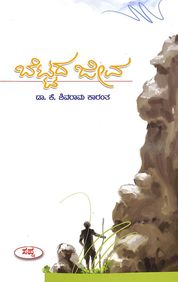
Book Review #83: Bettada Jeeva By K. Shivaram Karanth

Title: Bettada Jeeva
Author: K. Shivaram Karantha
Publishers: Sapna Book House
Genre: General Fiction
Pages: 150

There are few book which haunts you for some time though you’ve finished reading it. Bettada Jeeva is one such book where it is almost impossible to forget the characters or the story as such. Set up in a remote mountain village of South Karnataka, the book captures the scenic beauty of the entire village and mountain as well as the subtle tragic events of a family. This book is short with just 150 pages. The story that the author had written is brilliant in many aspects leave alone the main plot of the novel.

The book has a prominent plot which carries the story till the end with its elusive narration. There are multiple protagonists in this novel and the main characters are the old couple Gopala Bhat and his wife Shankari and a visitor guest to their house Shivarama. The story appears as simple as it sounds in the first few pages of the book, but, as you read through it, it has something else to offer. The tragic and secluded life of the elderly couple will remain a focal point in this novel.

The story begins when Shivarama, another protagonist in the novel loses his way towards his hometown Puttur. While roaming in the forest pathway to decide which way to go, two strangers appears who were heading to a different village and offers their help to get Shivarama to a nearby village. As it was already night and there was no way that Shivarama could get any bullock cart to find his way, agrees to go along with those men and finally lands in the house of the elderly couple.

Shivarama received a warm welcome from the oldies and they treat him as one of their own relative. They offer him the best food and shelter and knows his whereabouts. As they begin their conversations, Shivarama was awestruck by the liveliness of these old couple and tries to get along with them. He speaks about their life in that secluded village and in that single house. Shivarama learns that, the old couple had two children, a boy and a girl. While the girl married at any early age and due to the complications in her pregnancy, the girl loses her life. While the younger son was the only solace for these couple, but he turns out to be a bigger disappointment in their life.

To get higher education, the son leaves their hometown and heads to Mumbai. Months and years passed and there was no sign of him. The couple became old and vulnerable waiting for their son’s arrival. 12 years have passed since then, and there was not even a single letter from their son. Dejected by their son’s behavior, the old couple comes to term with the situation and continues to live their lives by accommodating any new guests in their villages and treating them as if their own kith and kin has arrived. This was a turning moment for Shivarama and he decides to stay in the house for few more days to hear the couple narrate their entire story.

As the story drifts further, there are other short tales of how the elder couple adopted an orphan person Narayana and raised them as their own son. They got him married and provided him the land to till and build his own life. Now, this orphan person has two kids, which the elder couple feels them as their own grandchildren. There are also few short stories of visiting the deep forests, hunting down a tiger in the traditional village way and roaming around the water falls deep within the forests and so on.

As the days progressed for Shivarama, he approaches the elder couple and asks them few question regarding their lost son and promises them to find him in his next journey. As soon as he sees the photograph of their son, he remembers the face is quite known to him. He immediately says to the couple that he has met this person somewhere in Pune and promises them to find him out. The old couple lives with a renewed hope.

My Rating:

5/5

Tuesday, March 29, 2016

Book Review #82: Nanna Thamma Shankara By Ananth Nag

Title: Nanna Thamma Shankara
Author: Ananth Nag
Publishers: Total Kannada
Genre: Memoir/Biography
Pages: 180+ (Paperbound)
Source: Personal Copy

As a Kannadiga, I am a huge fan of Actor/Director/Theatre Personality Shankar Nag. A man who has achieved so much in such a short span of time is something remarkable. Acted in more than 80 movies in just 12 years. Directed many award winning films. First person to shoot a film in underwater in India. Man who directed the evergreen television serial ‘Malgudi Days’ and performer of hundreds of plays and a great visionary. Words are short to describe Shankar Nag. He is one of those amazing personalities in the Indian cinema that left this world at a young age of 36 in a tragic accident.

Ananth Nag, another legend in the Kannada film industry and more than that, the elder brother of Shankar Nag decides to write this book, a kind of dual biography where he describes his life and upbringing along with Shankar Nag. Surely, this is a riveting account. We get to read the early childhood days of Ananth Nag and Shankar Nag. The way they brought themselves in the film industry is something unthinkable.

Ananth begins his book by writing about his parents and his siblings, especially Shankar Nag. The Ananda Ashrama where they spent their early childhood is something very pleasant to read from the book. As usual, Ananth and Shankar grew up as any normal brothers. They shared every bit of happiness, joy, sorrow and fights together. Shankar Nag being the youngest in the family was an eye candy for all of them. Both brothers had completed their schooling life in Mumbai and their interests for acting took from that place.

As the book progresses further, we can read about how both Ananth and Shankar has grew up as best friends instead of brothers. They have common interests, that is, films and theatre. While Ananth has debuted years earlier than Shankar, Shankar took his time to debut as an actor. He was more interested in the Direction department than acting. With the strong persuasion from Ananth, Shankar agreed to act in films, and the rest is history.

Shankar has achieved a lot not only through his films, but also from other creative ideas that he has planned and meticulously executed. He has started the first fully equipped electronic recording studio in Bangalore, that is, Sanketh Electronics. He also had a great ideas of the society and that’s when Shankar had this idea of economic houses for the poor. Shankar Nag’s ideas were not only limited to that, he has also expressed his interest in starting a full-fledged country club in Bangalore. This was resulted in the construction of the Country club in the outskirts of Bangalore.

Shankar was also an active supporter of his elder brother, especially when Ananth was contesting in the elections. Shankar took special care in conducting the door to door campaigns, arranging for the helpers during election rallies, organizing most of the public meetings where his brother could deliver his election speeches, etc…

It is really hard to digest the fact that one man can do so many things in life within a short span of time. Ananth was really proud that, his younger brother could able to achieve more fame and name than him. His was a genuine fatherly concern towards his younger brother. Life is really unpredictable as Ananth puts in his own words. When whole family was having a happy time together for the successful opening of their country club, that’s when Ananth received the shocking news of his life. It was the accident news of Shankar Nag. Shankar was declared spot dead in that severe accident. And, he was just 36!!

The book is an excellent narration. Overall, Ananth could able to pass the readers his message. For sure, what might’ve gone through Ananth Nag’s mind when he penned this book is evident in every page. A must read for all the Shankar Nag’s fans. This legend lives in the hearts of millions of Kannadigas.

My Rating:
5/5

Monday, August 3, 2015

Book Review #74: Durgastamana By Ta. Ra. Su

Title: Durgastamana (Durga’s Sunset)
Author: Taluku Ramaswami Subba Rao (Ta. Ra. Su)
Published Year: 1982
Genre: Historical (Non-Fiction)
Publishers: Hamsa Sahitya
Pages: 650+ (Hardbound)

This novel is easily considered as one of the MAGNUM OPUS in the Kannada literature in the field of Historical writings. The author Taluku Ramaswami Subba Rao famously known as Ta. Ra. Su has literally given his life to complete this novel. He started writing this mammoth novel in the beginning of the year in 1981 and completed it in just under 5 months. By end of the year 1981 this novel was completed and by the early 1982, this novel has been released to the public. From that time, till today, this novel has stood against the time and tide and keeps inspiring many young writers who wants to take up the writings of a historical novel.

This novel has been awarded with the Kendra Sahitya Academy (The 2nd highest literary award in India) in the year 1985. Unfortunately, Ta.Ra.Su wasn’t alive to receive this award by himself. His wife accepted this award on behalf of him in the year 1985. The massive research that author has done in creating and writing this novel is evident in every page of the book. Probably, this can be considered as a single reference book to known the life and details of the last ruler of the Chitradurga, the indomitable, the ever loved Madakari Nayaka

Reading this novel requires a dedication and patience. It is not at all easy to read a mammoth book of more than 650 pages and grasp every details of it. It is that much detail oriented and it gives us an ample amount of information that need not be verified with any other books.

The novel opens with the death of the King, Kasturi Rangappa Nayaka II, the erstwhile king of the Chitradurga. The wife of Kasturi Rangappa Nayaka II decides to adopt the 12 year old Madakari Nayaka, the son of Bharamanna Nayaka and Ningavva that lived in a village called Janakalludurga (Nearby village of Chitradurga). Soon enough, the young Madakari Nayaka ascension to the throne has been done, and he was soon inducted in to the royal school to learn the art of administration, of war, of ruling, etc… under the able leadership of the Queen mother Obavva Nagathi and the ever loyal minister Kalli Narasappayya. As expected, Madakari Nayaka excels in his studies, his other education specifically designed for to be king. The time has already come to test his knowledge to the use in a small battle against the Rayadurga (Neighbor province of Chitradurga). The young Madakari Nayaka was invincible and soon enough he gains the trust and love of his people by his undiminishing attitude as a ruler. The people of Chitradurga has found their true ruler and extended their support and loyalty towards Madakari Nayaka. During his younger days, Madakari Nayaka has gained the trust of his royal court, his ministers, his family and his citizens and grew up as a much loved King.

The book further explores the details regarding Madakari Nayaka’s learning years and his marriage with Bangaravva, Padmavva and his love interests with the city devadasi girls Kadoori and Nagavva. He remained as a true lover to both of his wives and remained an ever loyal lover to the other two. His family details and discussions were discussed in many chapters and it is connected with the story, which I am omitting in my review.

As the book progresses further, Hyder Ali who was the ruler at the Mysore province and on expedition to expand his kingdom towards north. Initially, he approaches Madakari Nayaka for the much needed help, which was offered by Madakari Nayaka after consulting and taking advices from his minister Kalli Narasappayya. With the extended help from Madakari Nayaka, Hyder Ali was able to win over many Maratha provinces and their friendship grew day by day until an unfortunate event. This Hyder Ali was not a friend and not an enemy to any of his fellow kings, he only wish was to be the undisputed ruler across the India. To make that possible, he was ready to go to any extent. With these crooked thoughts in minds, Hyder Ali places his spies in Chitradurga’s kingdom to collect the information of the war details, like, number of soldiers they had, number of horses they had, number of weapons, bombs, foot soldiers, etc… of Chitradurga’s kingdom. During all these times, his minister Kalli Narasappayya wasn’t aware of these spies, but, not Madakari Nayaka.

Parashurama Nayaka, the younger brother of Madakari Nayaka, who grew up in the school of Minister Kalli Narasappayya, has gained much knowledge in the ministerial proceedings of his Kingdom. Madakari Nayaka appoints his brother to spy on his Minister Kalli Narasappayya to fetch the details regarding the spying from Hyder Ali’s men. To his astonishment, Madakari Nayaka finds out greater details than he was expected, which he questioned his Minister Kalli Narasappayya in the open court, that lead to the resignation of Kalli Narasappayya on the grounds of treason. But, Madakari Nayaka, didn’t take any action on his Minister, rather, Kalli Narasappayya himself resigned from his post and left the city along with his wife to some pilgrimage. 

Days become tough for Madakari Nayaka. After collecting enough information about Hyder Ali, Madakari Nayaka decides to break his friendship with Hyder Ali, which made Hyder Ali furious and decides to go for a war. In these times, Madakari Nayaka writes to Maratha Kings asking their support to fight against the Hyder Ali and his lakhs of man force. But, Maratha’s kings keeps Madakari Nayaka in wait as they were not able to resolve their own internal conflict. The rest of the details are explained brilliantly in the book. 

The final war sequence which covers almost half of the book is what this book is all about. As per this book, the war between Hyder Ali and Madakari Nayaka that went on for almost 8 months to an year is a battle that was never seen before and never after. The intensity of the battle was imagined brilliantly by the author, supported by his strong words and anecdotes. As expected, even in Chitradurga, the Muslim warriors from the Chitradurga’s side will betray Madakari Nayaka at the last stage. They secretly tied up with Hyder Ali and took a vow on Quran to never fight against the infidels. This betrayal cost Madakari Nayaka a great deal. Apart from this, the few leftover Maratha warriors argued about payment issues and never took part in the war whole heartedly. All these events led Madakari Nayaka to face the mighty force of Hyder Ali with his few thousand warriors, with a least hope of saving his kingdom. The results need not be mentioned here, as everyone knows what might have happened. The sun of Chitradurga a.k.a. Durga has set. That is “DURGASTAMANA”

Even after these many hundred years. The life story of Madakari Nayaka inspires everyone. His fearless attitude, his untainted charisma, his able administration, is a true testimonial of how great the Chitradurga during his time. A true classic hero of Indian history. Till today, several forts of Madakari Nayaka has been preserved in Chitradurga and made as a tourist place which attracts thousands of tourists every year. A must visit place for everyone. If you have read the book before visiting this place, you might long for those tiny details that you have read in the book. A great compilation by the great author. I recommend this book for everyone. 

My Rating:
5/5

Thursday, June 18, 2015

Book Review #70: Ooru Bangha By Viveka Shanabagh

Title: Ooru Bangha
Author: Viveka Shanabagh
Publishers: Akshara Prakashana
Genre: General Fiction
Pages: 250+ (Paperbound)
Source: Personal Copy

There are few books where it gets popularized without a reason and when you read it, you're left with a big disappointment. This book titled “Ooru Bangha” by the well acclaimed Kannada author Viveka Shanabagh does comes under this category. This novel tries to convey a message using story inside a story concept, but failed large at the idea. I am not sure whether author was trying his best to finish this novel or he just wrote because he had to. I was totally disappointed after reading this book. This is not a contemporary styled novel, nor a philosophical novel, neither a romantic novel nor even a story oriented novel. But where do I categorize this book at the first place?

The protagonist of the novel is Manamohan, a corporate employee, a writer and a romantic person to say the least. One fine day he gets an invitation from his colleague to attend house-warming ceremony. As expected he visits his colleague’s new home and after all the party, he accidentally meets a person called Shami, a young girl who is probably in her 20’s and our hero offers her to drive home. With all the initial greetings, our hero develops an interest in this young girl and he often finds trivial reasons to meet her and wanted to spend time with her. He joins her in the morning jogging hours and due to his writing background, he created an interest in this young girl about his village story and other details. So this girl pleads him to tell all those stories. Our hero begins to narrate few stories every day.

Cutting the story back to 70’s, our hero narrates a dramatic story about his village and about a person called Lawyer Kimani and his lifestyle. The dry narration by the author couldn't make it enough for us to read this story further.  There is lot of disconnectedness as it gets boring further. This Lawyer Kimani’s story occupies almost 2nd half of the book. There was no concrete end to this story.

As the book progresses further, now our hero is much into this young girl Shami and he gets his long awaited chance of having sex with her. With no clear intentions whatsoever, they both started to make out in her house, in car, and in some stupid places. Shami, being a modern girl, never forces our hero for a 2nd marriage. This eats up the 3rd part of the book.

From nowhere, the author brings up a character called Dr. Sunkapur, a legend in our hero’s village. Author tried to connect the stories of Lawyer Kimani with this Dr. Sunkapur and failed miserably at that. Both of these stories end abruptly without a logical end.

Cutting the story to present, our hero and this young girl Shami will have some heated arguments over a trivial reason and will go apart. Our hero, guilt ridden and feeling sorry for his wife and son tries to forget this young girl. But, he couldn't get over with the charm of this young girl. He tries to meet her again. To his disappointment, he failed to do so. That’s the end.

I have omitted few parts from the book for the sake of the review. It just couldn't get any worse than these kinds of books coming to market and lure people to buying it. May be the author would’ve waited for some more time to perfect this story than to publish it unfinished.

My Rating:
2/5

Saturday, December 27, 2014

Book Review #53: Doora Saridaru By Dr. S. L. Bhyrappa

After all, when it comes to philosophy based books, I will not be able to put down that. This book "Doora Saridaru" of Dr. S.L. Bhyrappa sir is a bundle of philosophical thoughts. Each character that the author created is a mountain of philosophical thinking. This novel mainly explores the idea of marriage, or we can put it as inter caste marriage and it also explores the requirement of right thinking or we can say as bonding between a girl and a boy before getting married, how this will affect a marriage etc... We can call this book as philosophy of marriage or literally philosophy of life. 
 
I really liked the philosophical ideas that the author has imbibed in all the characters. “Doora Saridaru” will be translated to English as “Moved Away”. Yes, this novel speaks about the couples who are yet to be married, but they decided they would get married. However, some unfortunate events will make it not happen. Reasons look very trivial for a normal novel reader. For a philosophy student this novel looks like an absolute profound experience. The thought that runs between each protagonist and the dialogue exchange between him and her is an awesome thought process.

The plot of the novel seems like a regular college love story. Sachidananda a studious young man who was studying English (Hons) degree finds a girl called Vinithakumari from his class who was very good looking and like him; she was pursuing her interests in literature and poetry. Soon, they will find interest in one another and expresses their love interest and it goes on like regular love stories. 

In another parallel story, a student called Vasantha a philosophy pursuing graduate and senior to Sachidananda. This Vasantha is a very introverted person. However, when it comes to debates and argument about philosophical subjects there is no one in the college who can match him except for a girl called Uma. She is Vasantha’s junior in the philosophy degree course and she was the one who can match to the qualities of Vasantha. As expected, some favourable incidents will make Vasantha and Uma to be another couple in the college.

As the story further progresses, there is a regular parental opposition to this marriage, there is disappointment, there are resentments etc... However, what I really liked about the novel is the after effects of the incident where their respective parents will oppose to these marriages. Vinitha’s mother rejected Sachindananda and Vinitha was not strong enough to oppose her mother. Sachidananda tried to convince Vinitha for a registered marriage. Even here, Vinitha was not strong enough to make a decision. She believed in philosophy of pain. She often told Sachidananda about how her suffering and pain will help to change her mother’s mind. Dejected by Vinitha’s decisions, Sachidananda will become a maniac, he loses his interest in life, he wanted to become a hermit, so, he leaves his house and goes to some hill station and tries to find solace for his burning soul. There he meets a sage or a person who renounced his life. This person has an important story in later stages of the novel. There he learns something better and decides to stay strong and he heads back to his home and concentrates more on his studies.

In another parallel story, Vasantha and Uma will participate in a debate about philosophy of truth and philosophy of marriage. There in one occasion, Uma humiliated Vasantha. She made his every argument very trivial and stupid. Vasantha decides immediately that this idea will not work in his life. He tries to convince Uma that, she would never argue with him once they get married. For which, Uma slowly said that, it is not possible but she will try her best. Therefore, Vasantha decides to postpone their marriage for about a year.

The real magic of the novel appears now, the huge philosophical thoughts of each protagonist comes into picture. Sachidananda decides to study like there is no tomorrow. He starts to pursue his master’s degree. Whereas Vinithakumari decides to drop out of college and she starts to work as a schoolteacher. Vasantha decides to pursue his PhD and Uma decides to work for an NGO. Will these couples get married or what role the fate will play in these lives? I stop at this point and let the readers go through the book and find out the answer! 

I recommend this book to everyone and for those who are students of philosophy or interested in learning about philosophy. It is a classic attempt by my favourite author. 

My Rating:
5/5

Monday, December 22, 2014

Book Review #51: Gruhabhanga By Dr. S.L. Bhyrappa

A book that is full of tragic events. A book that is full of emotions. A book that is full of family problems. A book that is full of foul language. Yet, this is a book that speaks about a woman. This is a book that speaks about the hurdles overcome by a strong woman. This is a book that speaks about what it takes to live life. Finally, this is a book that speaks about strong will.

Gruhabhanga is a stirring, emotional and tragic novel from my favorite author Dr. S.L. Bhyrappa. The title “Gruhabhanga” can be fairly translated to English as “Destruction of a house”. Well, this is a literal translation. The real meaning or the crux of the novel speaks about a household. It speaks about various people from this household and their little stories. This is one of the epitomes of Indian Novels. This novel has been made into a daily serial or popularly called as sitcoms. It was such a huge hit at that time and even today this book marks as the only few books that got translated into all Indian official languages. This novel was originally published in Kannada language.

The entire story of the novel takes place in somewhere between 1920’s till 1950’s spanning close to 30 to 35 years. Due to the backdrop of village in this story, this novel strikes a chord with its readers. The main theme of the novel can be considered as a mere family story. But, the stirring images of each and every character are what make it as a class apart.

The main protagonist of the novel is a woman called Nanjavva.  She was fairly educated girl and her father Kanthijoyeesa is a well learned Brahman. In one of the unfortunate events, Nanjavva will get married to a person called Chennigaraya. Chennigaraya had a mother Gangavva (A widow) and a younger brother Appannayya. Chennigaraya was a village revenue collector. His job was to collect the revenue from the farmers, counting the number of acres that each farmer is cultivating, and type of the crop they are cultivating and amount of the crops that they grow each year. He has to sum up all these calculations from across 40 other villages and should submit these records to a nearby government office. He will be given commission based on this records collection.

During Nanjavva’s initial marriage days, everything was going smooth and happy. In just few months, her mother-in-law Gangavva, a bad mouthed woman will unnecessarily interfere with the affairs of Nanajvva and Chennigaraya. This intrusion has become worse day by day as such, one day, Chennigaraya who is a momma’s boy, will start beating Nanjavva and he even stopped going to revenue collection. This was the turning point in this novel.

Having learnt all these things, Nanjavva decides to take care of her family. Now she is a mother of 3 children. She begins herself to go for revenue collection and she starts to write all the records and only she would get the signature from her husband. Few learned members from the village will be aiding Nanjavva in her quest towards raising her children. During all these years, Gangavva, the mother-in-law of Nanjavva will be badmouthing her and often tries to link up illicit relationship with other men in the village. These events made Chennigaraya to abandon Nanjavva forever.

Later part of the novel is simply mind blowing. Author SLB has made this Nanjavva a role model for all the working women out there. Nanajvva slowly build her identity in the village. She often begged for few days in order to feed her children. She stayed in racks of an old abandoned house and making leaf plates to make the meets end. By this time, her elder son Ramanna was about to finish his school and his elder daughter is the age of marriage. Due to the help of few kind hearted villagers, Nanjavva was able to conduct her daughter’s marriage in a simple ceremony to a school teacher Surya Narayana. Surya Narayana, who is a school teacher in a neighbor village, will inform Nanjavva that, he will find a house and then he will take his wife there. Till that time, Nanjavva’s elder daughter will stay at her mother’s house.

Here, the fate plays an unfortunate incident in Nanjavva’s life thorough the author’s imagination. The entire village was attacked by plague epidemic starting with her house. Unfortunately, both her elder son and elder daughter passed away on the same day in a span of 3 hours who was suffering from plague. This incident made Nanjavva to lose faith in god. Fearing the same death for her younger son, she sends him off to her brother’s house and starts to live alone.

Nanjavva had always dreamt of her own house in the village. She works very hard to save the required amount of money and buys an old house and she starts to reconstruct the house. But fate was planning something else for her. As soon as she finished the construction of her house, there was another tragedy that struck in this household through the death of Nanjavva herself. She was attacked by the same plague epidemic and now the entire novel takes it turn towards climax.

In all these events, Chennigaraya the good for nothing husband of Nanjavva was seen with no emotions at all. Brainwashed by his mom, he expresses no grief over the death of his wife or children. He didn’t even bother to check on his younger son who is staying at Nanjavva’s borther’s house. He ended up visiting prostitutes on a daily basis.

What happened to Nanjavva’s younger son? Was he living peacefully in his uncle’s house? To know the answer, one must read the book. I think there was no better climax given to this book than this.

The above synopsis seems very simple. But, the vivid story described in this book will make anyone weep while reading this novel. The choice of words seems very daring. Since, no other novelist was dared enough to write such foul language in any novel. These words include Bastard, Son of a Bitch, Fuck You; Fuck your mom, Slut, etc... Etc… as I said, this is a village backdrop story, hence, the foul words is an apt choice of expressing one’s anger or resentment.

Overall, I feel this novel will stand tall as one of the greatest novel ever written in the history of Indian literature. At the same time, this novel will make the readers understand about the cultural practices, traditions, caste systems of a 1930’s India. I recommend this book to be read by everyone. It’s like a once in a lifetime.

My Rating:
5/5

Thursday, December 4, 2014

Book Review #47: Bhitti - An Autobiography by Dr. S.L. Bhyrappa

I was not at all ready to write up a review for this book. This book, Bhitti is the autobiography of Dr. S.L. Bhyrappa, the ace novelist, the philosopher and a great human being. Bhitti is a Kannada language word. It can be translated to English as a WALL or a PORTRAIT, where one can post their picture. Evidently, this is an apt title for this book. He has written his life story as a picture on the wall. It is so thrilling and one will feel profound whilst reading this book. I am quite inspired by this book, at the same time; I was saddened by reading his life journey. For sure, Bhitti is a masterpiece narration and it stands as a lesson for those who are writing their autobiographies.

What made it more special about this book? It was the sheer brilliance of SLB sir and the way he narrated his account of life in this book. He has not crossed the limits of boundaries while describing events and not derided anyone who directly or indirectly was the cause of sabotaging his earlier childhood and his teen years.

He started his book by describing his childhood when he was aged 4. He went on describing the social status, surroundings, events, the neighbors, his family members, his relatives and most importantly his mother who played a crucial role in bringing up him in the righteous way. He also writes about his father who was good for nothing and describes him as an aloof. His father was directly responsible for all his miseries that he went through as a child. His mother was the sole responsible person in his family who was taking care of the daily needs of all the family members. He has grown up in a situation where there were not even proper meals to eat. His family often slept without eating anything except for his father who happened to be the revenue collector from the farmers around the village and he used to spend most of his earnings for his amusements like eating in hotels, travelling for days, etc…

He has written in detail about his early childhood, his teen years and his college days and till his retirement age that spanning over 70 years. He tells us a riveting story.  His great shock came in when his elder brother and sister who died on the same day in a span of 3 hours due to plague epidemic. This was literally a shock to young SLB. After this incident, his mother sent him to his brother’s house so that he can get a proper education. SLB describes his stay at his uncle’s house as one of the devastating years of his life. He literally became a slave for his uncle doing cattle work, temple cleaning during the day with little or no food till noon. Even here, life was cruel to him, he received a message from one of his villagers that, his mother too died of plague. He was barely 11 years old at that time.

He has given an account of his childhood and his young teen years in 2 of his novels “Grihabhanga” and “Anveshana”. The stirring images and characters from both of these novels is a true incident happened in the life of SLB. He had faced some of the brutal tortures by his uncle, his aunt and importantly from his father. So, he decides to run away from home and goes to a different town where he literally begged every day for food. In those times there was a concept called “VAARANNA” that means “WEEKLY FOOD”. This concept is not existed in recent times. But, this is a concept where a student that begs in each house will come to an agreement with them that, he will be given a day’s food. Like this, he arranged in 7 different houses that agreed him to provide food.

He was not agreeing with himself for begging during his teen years. So he does odd jobs during his school breaks to make the ends meet. He works in a small hotel as a cleaner and waiter, he sells incense sticks during evening, he even worked as a gatekeeper for a cinema hall, and he went to every village as a story teller and amuses the villagers by his story and accepts whatever the gifts the villagers will offer. By all this means he manages to complete his schooling. While describing these events, SLB never forgets to remember all those kind hearted teachers that helped him a lot in his education.

SLB has struggled in every walk of his life by managing to keep him alive and educated. With a “vagabond” father, his life should’ve been finished long ago. But, some divine force was keeping him alive all these years so that he can win the hearts of millions of people that he has won today.

Despite undergoing such hardships in his life, his quench for reading never stopped. He was reading almost anything. By the time he reached his 20’s, he might have read at least 200 odd books. That’s what made him a good story teller. With all the blessings from every good person that he met in his life, he went on to complete his M.A (Honors) in Philosophy and managed to stand out as a gold medalist in his final years. He has written his first novel Bheemakaaya when was just 18 years old!!

Very early in life he realizes the correctness of defeating an opposing view by logical and knowledgeable argument rather that brow beating it by raising the voice. This comes through in his books which are very well researched. We see his views on religion and rituals evolving, his philosophy of life taking root and the awakening and evolution of his creative genius. Tips for new writers are strewn throughout the book.

SLB has seen life from very close quarters and is very well travelled. He has travelled all across the globe (may be 3 times overall) not to mention large swathes of India. SLB writes as he preaches with a detached air but is forthright. He never hesitates in calling a spade a spade; we see this in him even as a young boy.  He has always stood up for truth and justice and is a fighter and a survivor. A survivor because all the bitterness, the pain and betrayal he has seen  would have broken the spirit of an ordinary human being but it has not made SLB cynical. He has internalized it all to reach great heights. The success and heights that SLB has attained is testimony to the triumph of the human spirit. The autobiography is written in a linear chronological manner. The language is succinct and the book gripping and not able to put it back.

What I feel is the childhood and his student days of SLB sir’s autobiography must be made mandatory for all the new generation kids for reading. They will realize the importance of education. They will get a new perspective in life and will develop a respect for their life, their education.

I feel very underage to judge the autobiography of a great human being. At the same time, I made a point clear in my mind that, whatever happens in life, I will fight it till the end. The silver lining is a birth right of every human being on this planet. I recommend this book to be read by everyone. I prostrate my head at the feet of SLB sir for giving me a lifetime treasure of books. What one can only imagine in their life is a fact from SLB sir’s books.  

My Rating:
5/5

Buy this Book from Flipkart.com:
KANNADA VERSION LINK

ENGLISH VERSION LINK

Tuesday, November 18, 2014

Book Review #45: Anveshana By Dr. S.L. Bhyrappa

This book is a sequel to SL Bhyrappa’s highly acclaimed novel Grihabhanga. The story starts from the point where Grihabhanga has been left off. It is such a nice attempt of SLB sir in this novel that, we can easily remember all the stories, characters from the novel Grihabhanga.

For those who haven’t read Grihabhanga, let me tell you the crux of this novel. So that, readers can actually relate to this novel Anveshana. A small fictitious village in Tumkur and a poor farmer family was living in that village. Nanjamma the main protagonist in the novel Grihabhanga was married to a loaf called Chennigaraya. She faces many hurdles and difficulties in her life throughout the novel. She loses two of her children who were suffering from plague. Her husband is a good for nothing man, who wanders day and night around the village doing nothing and spends the money eating in hotels and other illegal activities. So, it was Nanjamma who takes care of her family and starts earning money so that she can build a home of her own. The only surviving child of her, Vishwanatha, who grew up with a monk leaves the village once his mother dies. Vishwanatha has a maternal grandfather called Kanthi Joyisa who stays in the outskirts of the village doing black magic and other stuffs.

In Anveshana, the story picks up from the phase where the grandfather Kanthi Joyisa who became terminally ill, wanted to see his grandson Vishwanatha for one last time. He wanted to leave his belongings, money and other stuff to his grandson. So he sets out on a journey in search of his grandson. This epic journey is called as Anveshana.

Kanthi Joyisa wanders many neighbor villages, town and other cities to know the whereabouts of his grandson. He meets many acquaintances of Vishwanatha and follows the route information that he gets from them. On his final voyage he meets a childhood friend of Vishwanatha. He is a tailor in a small village. He informs Kanthi Joyisa that, the last time he saw Vishwanatha was near a movie theatre, where Vishwanatha was working as a ticket collector. And the journey of Kanthi Joyisa continues.

Here author introduces the character Vishwanatha and his life journey in subsequent chapters. Vishwanatha who leaves his village settles down in a town and works as a hotel waiter for some time. Later, he moves to the house of a lawyer and works as a cook for some time. He leaves that place and travels to Mumbai and works as a Tonga Walla for some more time. And he continues his journey leaving no trace of him for his friends or relatives.

The magic of the novel is in its immense detailed explanation of Vishwanatha and his way of living life. Author introduces us to a phase where Kanthi Joyisa, the grandfather of Vishwanatha loses all his hopes of finding his grandson. He informs the tailor friend of Vishwanatha and goes back to his village and dies in isolation. This scene closes the curtain to the character Kanthi Joyisa.

Author introduces us to various traits of Vishwanatha throughout the novel. His love interests, his marriage, his college life etc… the vivid description of Vishwanatha’s love life, married life and college life and renunciation is a treat to read from the book. From this novel, we will come to know that, Vishwanatha has a habit of writing diary. As he leaves his final destination to the renunciation life, the school teacher of Vishwanatha discovers this diary and starts to read it and tries to understand the character Vishwanatha in a better way. This marks the end of the novel.

The striking gesture in this novel is the character Vishwanatha never appears in this novel as a first character person. He was often remembered, described, referenced but never in any way appears as the main protagonist of the novel, yet, he is the hero of this novel. All credits to the magical writer SLB sir. He has marveled in each of his novels. I have no words to explain more about this novel.

My Rating:

5/5

Monday, October 13, 2014

Book Review #42: Nirakarana By Dr. S.L. Bhyrappa

This is a short book that captures the rollercoaster ride of a man that stuck between family life and renunciation. Dr. S.L. Bhyrappa has marveled once again in this book. He has gone inside a man’s mind and written this novel as if he is narrating the story of that man’s life. “Nirakarana” can be translated to English as “Denial”.

The story seems to be very simple at the beginning. The protagonist of the novel, Narahari a moderately educated man, married twice, but both of his wives are dead long ago. Along with 5 kids from 2 wives, Narahari seems to have lost the capability to lead his life. He was struggling every day to take care of his kids with his low paying and overworking job. He is a stenographer in the leading English daily in the town.

So, he decides to give away his kids for adoption. He publishes an ad in his newspaper with the help of his editor. He decides to give away his kids for adoption for well settled families. He also decides that, he gives each kid to a different family. At times, he felt that he is doing something wrong. But, he gets this strong feel of guilt whenever he looked at his kids. He is not able to provide them the proper childhood that they've rightfully owned. Therefore, he decides not to waste a minute or two. Within 6 months of his publishing ad, he was approached by various families from different cities across the country. Within 1 year, he gave away all his kids for adoption to different families.

What follows later is a true mastery of art work by the author. Having got ridden of his kids, he decides to renounce his working life and decides to become a hermit. He informs his editor about his decision and leaves his city forever. Initially he wanders around many holy places and meets many sages and saints. He somehow started to like his way of learning the life and its oddities. He starts to learn meditation, at the same time he decides to go to the Himalayas. There, he meets a sage who wore nothing, spoke nothing and ate nothing but a potato for a day. He was attracted initially in this way of renouncing the world. He tries to follow in the footsteps of this sage, but he failed miserably to cope up with the hard way. He was no longer able to continue living life that way. He decides to head back to the city and seeks a warden job in a local orphanage. There he befriends the accountant of that orphanage and narrates his whole life with him.


As the story further progresses, this accountant friend of Narahari informs him that he will go and see the conditions of kids that Narahari had gave away. Once this accountant was back, Narahari learnt that, his kids are not leading a happy life after all, except for 2 kids. Surprisingly, this accountant had brought a kid along with himself and informs Narahari that, this kid is his son. He had brought this kid only to save kid’s miserable life in the adopted house. Initially, Narahari was not happy to see his kid coming back to him. Later, he starts to get a liking for this boy.

As the story approached towards the end, a young girl would come to this orphanage and with an instant she identifies Narahari as her father. What follows after their long discussions gives a complete picture of the novel. I stop it at this point; this much would be enough for a review!!

What I liked about the novel is its immense detailed presentation of the renounced life of Narahari. It is just not about Narahari, this story reminds us of the hard times that may come up life and how one should approach it instead of renouncing and get rid of our responsibilities. Difficulties, hardships are all part of life. One should not get dejected by it; rather, one should face it with more energy and try to bring out the solution. There’s always a silver lining in everyone’s life. 

My Rating:
4/5