Showing posts with label Son. Show all posts

Monday, December 19, 2016

Book Review #100: Chanakya in Daily Life By Radhakrishnan Pillai

Title: Chanakya in Daily Life
Author: Radhakrishnan Pillai
Publishers: Rupa Publications India
Genre: Life Lessons/Motivational/Non-Fiction
Pages: 272 (Paperback)
Source: Advanced Review Copy from Publishers

Life is all about doing the right things in the right way. As the old adage puts it out “Knowledge is knowing a tomato is a fruit; Wisdom is not putting it into a fruit salad”. There is a clear idea of what to learn and what not to learn from vast amount of sources. But, what if you find everything in a book that is combined as a one stop solution for all those life lessons? The book “Chanakya in Daily Life” by Radhakrishnan Pillai would fill that gap. This book is all about differentiating between what is right and how to tread that path.

The blurb at the back cover of the book says “Life is unpredictable and full of challenges. One wrong step and everything can come crashing down. In such a scenario, one often wishes for a roadmap of life, but how is that possible?”

This book is a clear roadmap for all your doubts and worries ranging from personal, professional and family life. Taking example of an Indian guru, Chanakya and his ever popular work Arthashastra, author has come up with a book that can be read every day and for lifetime too. The book is broadly and rightly classified in to three different sections. The first part deals with the individual life and lesson that can be learnt and adopted in one’s personal life. The second part of the book deals with the professional life that teaches what one must do in their professional life. The third and final part of the book teaches the importance of a family life. Each part holds its importance and is equally connected to the other two. One cannot have a sounding personal life, but lacking professional or family life satisfaction. It is interdependent on each other and this book explains the best way of handling all these things diligently and in a profound way.

In the first part of the book, the author discusses the personal life of an individual. The ideas ranges from waking up at a certain time every day, daily ritual, exercise for the body and the mind, relaxation, developing tastes in music, inculcating the habit of reading, having a hobby that could become a profession one day, sleep duration, breaking and planning the day into productive hours, imparting the knowledge of astrology and up to what extent one can believe in  astrology, practicing meditation, food habits, financial goals, creative hobby, finding a guru, having a personal philosophy, etc.. Each chapter holds a valid point and a direction in which one can master these habits. Each chapter is explained by keeping a reference of Chanakya’s Arthashastra.

In the second part of the book, author discusses the professional aspects of an individual. This part mainly focuses on how one should behave and adopt a disciplined professional life. Author has discussed topics ranging from going to the workplace, pondering over the day to day task, preparing for the day in advance, developing the interpersonal skills, handling the team member and co-workers that has different mindset and thinking capacity than yourself, training people, daily documentation of work, developing the contacts in a working place, how to give a recognition for your sub-ordinate, what one must follow while appointing a manager, what one should do in case of work related travel and how one can adopt these leisure hours to productivity, how to plan for daily, weekly, monthly and yearly review meetings, and finally how one should plan for their retirement in advance. These lessons for sure are relevant even today. As per Chanakya’s reference in Arthashastra, each and individual lesson explained in this chapter would make a king wise and assertive in the long run. So does a common man when he adapts a tiny bit from these sections in to his personal life.

The final part of the book deals with the family life and its importance for an individual and how it is connected to the personal and professional life. The author discusses various facets of one’s family life and how Chanakya has prophesied in this Arthashastra regarding a King’s family life and how it is still relevant in present world scenario. This chapter begins with the duties of the householder and what best one can offer to his family at his abilities. What is the purpose of marriage and how one should treat his spouse, what are the advantages and disadvantages of sex that can impact a family life of a person, how one should take care of his family and provide basic necessities for his dependents.  How to educate their children, what is the best way to bring up their children, the power of family prayer. What are the lessons one can learn for being a good parent, why imparting the concept of charity to children should be encouraged, and how to give personal individual space for each family members. This part ends on a chapter of how to feel gratitude for whatever things we have obtained in this life from their family.

Overall, this book is not a regular one time read it and forget it affair. This book can be read again and again. You can start in any chapter and it still makes profound sense. A book that can be considered as a package of life lessons in all three important aspects of a human life. I would encourage readers to buy this book. This is definitely a collectible stuff.

Few famous Chanakya’s quote that are used in this book:

-       Education is the best friend. An educated person is respected everywhere. Education beats the beauty and the youth.
-       There is some self interest in every friendship. There is no friendship without self interest. This is bitter truth.
-       As soon as the fear approaches, attack and destroy it.
-       Once you start working on something, don’t be afraid of failure and don’t abandon it. People who work sincerely are the happiest.
-       Learn from the mistake of others, you can’t live long enough to make them all by yourselves.


My Rating:
5/5


Note: This book was given to me by the Publishers in exchange for an unbiased review.

Friday, May 13, 2016

Book Review #85: Nanna Bhayaagraphy By Beechi

Title – Nanna Bhayagraphy
Author – Beechi
Genre – Biography
Publishers – Sapna Book House
Pages – 350 (Hardbound)
Source – Personal Copy

Numerous authors and popular personalities engraves their autobiography as soon as they contemplate that they have accomplished something big in their lives. Those books are merely pages about how they have achieved success in their life by fighting against all odds. Though it’s kind of an inspiration to many readers like me, but, the actual bothering point is, they are just human beings like us, and even they have shortcomings. Will they ever dare to pen those inadequacies in their biographies? I certainly doubt it. Beechi a.k.a Bheemasena Rao is an odd man out in such cases. He has written his autobiography in such a way that, the readers would get a sense of feeling that, this man is speaking his heart out or rather he is sitting beside us over a drink and narrating their entire journey without any white lies.

The book is not about how he rose to become a successful author of 57 books or how he achieved his title of veteran writer. He has kept himself to the ground and introduced us to a exhilarating and impressive interpretation of his life. As a writer, Beechi is a comical fiction writer. His ever great works like “Thimmana Tale” or “Thimma rasayana” proves that he has kept his grief-stricken life behind his comedy writings. This book is titled as “Nanna Bhayagraphy” that can be slackly translated to English as “My Scary Life”.

Beechi begins his story from the time of his birth, telling the stories about his orthodox family and how he has grown up in the pre independent India during the early 1930’s. Till adolescence, Beechi was a firm believer of God. By the age of 18 or so, he declared himself as an atheist and lived his life like one. At the same time, he wasn’t contrasting to any of the religious proceedings that used to happen in his house. Neither had he opposed his family members. Having not seen his father at an early age made the author to not to mention a great detail about his father figure in this memoir. His mother, a staunch orthodox, was succumbed to illness and left this world when the author was just 7 years old. Grown up in the house of his uncles, author had faced stark difficulties and persistent mocking by his kinsfolks. Author has an elder brother and a sister, who were world to him during his distressed times.

As the book progresses further, we get to read the author’s ‘not so good’ educational credentials. Studied up to only 10th standard, he had no choice but to earn his bread and butter himself for the rest of his life from an early age. He made all his determinations to stay well-balanced during all these struggling years and slowly opened himself to the world of literature. Comedy was his forte and since his first publication, he never looked back. He went ahead and wrote 57 bestsellers. Several of his works have been performed as plays in theatres and radio. Being a part time performer, author himself has acted in few of his own plays. His success was soaring to the new heights while his personal life was tumbling down.

Author has no fear in disclosing that he is habituated to smoking and drinking for lifetime. His wife was his greatest admonisher for his habits, but that never daunted him. He continued to be a great writer, great speaker and a fantastic human being.

Elucidating his personal life perspective, author had three children and out of which he has lost a child when there was complications in his wife’s pregnancy. That went even shoddier, when he found out that his wife was mentally ill for almost a couple of years. He made all his efforts to give a good education to his other children and was successful in doing it. But life was not a fairytale for him. At the age 22, his second son, a graduate in commerce and a primary critic of his works, died due to typhoid. This event has made the author to lose his focus for some time, but he bounced back. The only remaining child, his elder son, didn’t disappoint the author, he went ahead and completed his doctor degree. He got married and now they are a happy family with grandchildren.

Amidst all the events, author is firm in calling spade a spade. He recorded some of the prominent events in his life without hesitation that includes, his rendezvous with the prostitute households. He affectionately reminisced many of his colleagues and well-wishers in his life who contributed directly or indirectly to keep him gratified. His literary guru, Aa. Na. Krishnaraya played an important role in the author’s life, which made him to become a better writer. His close friends and his drinking buddies provided him the relaxation and relief that he always longed in his lifetime. His wife, though uneducated, proved to be a worthy partner to him. She held the responsibility of bringing up their children and taking care of the house despite bearing all the lunacy of the author.

Overall, a fantastic narration. This is a different and yet the honest way to write an autobiography. The author never called himself a legend. He just described his life with all the ups and downs and his staunch atheism concept and the greatest love he had for the humanity.

My Rating:

5/5

Friday, May 6, 2016

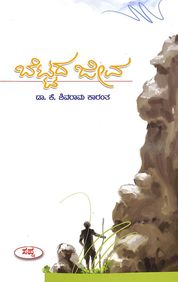
Book Review #83: Bettada Jeeva By K. Shivaram Karanth

Title: Bettada Jeeva
Author: K. Shivaram Karantha
Publishers: Sapna Book House
Genre: General Fiction
Pages: 150

There are few book which haunts you for some time though you’ve finished reading it. Bettada Jeeva is one such book where it is almost impossible to forget the characters or the story as such. Set up in a remote mountain village of South Karnataka, the book captures the scenic beauty of the entire village and mountain as well as the subtle tragic events of a family. This book is short with just 150 pages. The story that the author had written is brilliant in many aspects leave alone the main plot of the novel.

The book has a prominent plot which carries the story till the end with its elusive narration. There are multiple protagonists in this novel and the main characters are the old couple Gopala Bhat and his wife Shankari and a visitor guest to their house Shivarama. The story appears as simple as it sounds in the first few pages of the book, but, as you read through it, it has something else to offer. The tragic and secluded life of the elderly couple will remain a focal point in this novel.

The story begins when Shivarama, another protagonist in the novel loses his way towards his hometown Puttur. While roaming in the forest pathway to decide which way to go, two strangers appears who were heading to a different village and offers their help to get Shivarama to a nearby village. As it was already night and there was no way that Shivarama could get any bullock cart to find his way, agrees to go along with those men and finally lands in the house of the elderly couple.

Shivarama received a warm welcome from the oldies and they treat him as one of their own relative. They offer him the best food and shelter and knows his whereabouts. As they begin their conversations, Shivarama was awestruck by the liveliness of these old couple and tries to get along with them. He speaks about their life in that secluded village and in that single house. Shivarama learns that, the old couple had two children, a boy and a girl. While the girl married at any early age and due to the complications in her pregnancy, the girl loses her life. While the younger son was the only solace for these couple, but he turns out to be a bigger disappointment in their life.

To get higher education, the son leaves their hometown and heads to Mumbai. Months and years passed and there was no sign of him. The couple became old and vulnerable waiting for their son’s arrival. 12 years have passed since then, and there was not even a single letter from their son. Dejected by their son’s behavior, the old couple comes to term with the situation and continues to live their lives by accommodating any new guests in their villages and treating them as if their own kith and kin has arrived. This was a turning moment for Shivarama and he decides to stay in the house for few more days to hear the couple narrate their entire story.

As the story drifts further, there are other short tales of how the elder couple adopted an orphan person Narayana and raised them as their own son. They got him married and provided him the land to till and build his own life. Now, this orphan person has two kids, which the elder couple feels them as their own grandchildren. There are also few short stories of visiting the deep forests, hunting down a tiger in the traditional village way and roaming around the water falls deep within the forests and so on.

As the days progressed for Shivarama, he approaches the elder couple and asks them few question regarding their lost son and promises them to find him in his next journey. As soon as he sees the photograph of their son, he remembers the face is quite known to him. He immediately says to the couple that he has met this person somewhere in Pune and promises them to find him out. The old couple lives with a renewed hope.

My Rating:

5/5

Monday, October 6, 2014

Book Review #39: Tabbaliyu Neenade Magane By Dr. S.L. Bhyrappa

This book talks about the conflict between people who are traditionally grown up, holding up the age old rituals and cultural practices and with the people who are educated with the modern viewpoint of the world. So the story captures this essence of what is morally right and what is scientifically right.

 Author SL Bhyrappa is a true gift to the Kannada literary world. His tales varies from social issues till modern space science. He is the only author that doesn't conform to a specific genre. He writes on many themes and many beliefs. That’s what I liked about SL Bhyrappa Sir. He has surpassed his limits in this particular book ‘Tabbaliyu Neenade Magane’ which can be translated to English as ‘Son, You've become an orphan’.

 The story is very sensitive and controversial. It captures the theme of cow slaughtering versus cow protectors in a small fictitious village. An aged person Kalinge Gowda, who believes that cows are the representation of Gods that descended upon earth. Kalinge Gowda belongs to such a revered family, where a cow has offered herself to a hungry tiger willingly ages back. This cow is popularly called as ‘Punya Koti’. A breed which is believed to be sacred than all other cows. Kalinge Gowda has a grandson Kalinga, who was graduated in Agriculture from the University of USA. Kalinga has married to Hilda, a US citizen. Kalinga has a friend in his village, Venkatramana, a vedic scholar and a middle school teacher who believes in every traditional practices and rituals.

The entire villagers were against the slaughtering of the cows, whether it is aged old or a young one.  Hilda the wife of Kalinga was distracted initially to get adjusted to the villagers. She seems to have lost all her independent life of US after coming to this little village. She has to sacrifice her beef consumption. Married to an Indian man, she found it very hard to get adjusted. Kalinga who was very careful initially tries to win the heart of villagers and his friend Venkataramana. But to his dismay, in whichever way he tries to reconcile with the villagers, it was backfiring. One incident where Hilda killed a cow in her farm and ordered her cook to prepare beef, resulted in the severe repercussions from the villagers, which made Kaling to apologize in front of entire villagers.

The book has this kind of conflicting stories throughout. When Hilda questioned Venkataramana about the animal sacrifices juxtaposing it with the cow slaughtering, she won’t receive a convincing answer. All in all, Kalinga and Hilda felt that they were out casted from the village and felt lonely and rejected. All this made Kaling and Hilda to leave their village once and for all and go back to USA.

The climax part of the novel takes an unexpected turn and leaves it readers with surprise. I feel that’s the best part of the book. I will not reveal that in my review. It has to be read from the book itself. After reading the book, every reader will face with few questions that they couldn’t find answers. What is more important in a society? Upholding the age old practices and thereby respecting our culture and customs or compare every situation with the modern aspects and live according to them? Is banning cow slaughter solves every problem in India? Only time can answer.

My Rating:
5/5