Showing posts with label Life. Show all posts

Tuesday, February 7, 2017

Book Review #108: Grasta By Karanam Pavan Prasad

Title: Grasta
Author: Karanam Pavan Prasad
Publishers: Concave Media & Publishers
Genre: Metaphysics/Philosophy/General Fiction
Pages: 143 (Paperback)
Source: Personal Copy

Hindu philosophy also known as “Darshanikas” in Sanskrit reveals us a great deal of information on life, birth, death, love, sex, family, personalities, etc… and, there is Quantum Physics that explores the vast and bounds of universe with relevant experiments and theories. A book that combines the ideas of these two in a story is an attempt that requires a great study in those subjects. At least enough homework should be done before even attempting such a feat.  

Karanam Pavan Prasad, a promising and talented young writer bridges that gap by writing some marvelous stories that even the young generation are much in awe of his talents. Grasta, this is his 3rd novel. He has surpassed his reader’s expectation by writing an extraordinary novel. This book combines the ideas of Metaphysics, Philosophy, Darshanikas, Quantum Physics, and Electricity etc… But, we definitely cannot term this as a science novel; neither can we term this as a philosophical novel too. This book stands in between. The thin line of separation from Science and Philosophy is what makes this book as a class apart.

The book is gripping from the very first page of the novel. The gamut of emotions expressed by each and every character is a treat to read from the book. The book takes us in a journey of two generations. The main protagonist of the novel is Avinash, an Electronic scholar, more than that a truth seeker. He is a common man by his birth, individual by his attitude and scholar in his own accord. He is engrossed in social, scientific, philosophical and personal aspects of his life. He is kind of a person who doesn’t get excited by the happiness and doesn’t feel a sense of remorse when something bad happens.

This book shows us the life in reality. Life, as in reality is not what we have seen in movies or read in some romantic novels. Life is full of struggles, yet we love the way we live and make the best out of our abilities. The protagonist in this novel expresses his concern, his ambitions, his future plan and how it became the otherwise. Avinash didn’t hail from an affluent family. His family background is one of the hearts wrenching stuff you read from this novel. Growing up in a family where death seems to be easier option that to survive. His parents didn’t had the best life because of the inter caste marriage.

As we read further into the book, we will get to read the tale of Avinash who rose from the ashes. He has built himself an identity by the help of good people that didn’t let him go astray. Now that he has a steady career but to enjoy his success, his parents are not alive. That’s kind of another struggle. Throughout the book we will realize, life is not what we aspired to be, instead life is what happens when you’re busy in making plans for it.

Rekha is another protagonist or I can say antagonist to some extent, enters the life of Avinash in the most unexpected way. This particular event makes Avinash question the life in many perspective, the reason being, should be read from the novel, and I am not going to include it in the review. Cheated by her boyfriend and her impotent husband drew Rekha towards Avinash. But her dubious plans remain intact till the end. Once we will realize what kind of woman is Rekha, we will sure feel pity for Avinash. He has done no fault, but still he agrees to the demand of Rekha and starts to live with her. Their relationship is one of a kind. He became her husband without marrying her. Became father to her child without even realizing. That’s where the novel hits like a storm. What is life? What are relationships? What are life goals? Is family is just a social agreement? Does every faults of a person become zero when living under a family? What is birth? What is death? What is the reason for man’s survival? These are the questions that haunts even after finishing the novel.

Though Avinash had a successful career as an Electronic Scholar, a PhD to his name, and big fat bank balance, he missed something deeply even any kind of relationship wouldn’t fulfill. He longed for the answers beyond the realm of life and death. He tried to find those things in his electronic experiments. He longed to build a system that provides electricity to the instruments without being wired. This is somewhat related to the Nikola Tesla’s futuristic ideas. But deep within, Avinash wasn’t satisfied with his life. He was cheated by his own people. The one person whom he respected throughout his life, at last, cheated him and brought him to a family circle which he legitimately didn’t belong to. All these events made Avinash become more and more introvert and in the end he just stopped looking for answers and took life as it came to him with open hands.

Overall, I feel these kinds of novel needs more traction from the audience. A serious readers like me, would definitely like to see such author reaching new heights. The author has every capability to make a mark in the literature world. His research and the stronghold on the subject have made this novel as an epic read. I would highly recommend this novel to be read by each and every one. The caption of the book put me in a thinking mode, “Birth is not important; the result of the birth is”.

My Rating:

5/5

Monday, December 19, 2016

Book Review #100: Chanakya in Daily Life By Radhakrishnan Pillai

Title: Chanakya in Daily Life
Author: Radhakrishnan Pillai
Publishers: Rupa Publications India
Genre: Life Lessons/Motivational/Non-Fiction
Pages: 272 (Paperback)
Source: Advanced Review Copy from Publishers

Life is all about doing the right things in the right way. As the old adage puts it out “Knowledge is knowing a tomato is a fruit; Wisdom is not putting it into a fruit salad”. There is a clear idea of what to learn and what not to learn from vast amount of sources. But, what if you find everything in a book that is combined as a one stop solution for all those life lessons? The book “Chanakya in Daily Life” by Radhakrishnan Pillai would fill that gap. This book is all about differentiating between what is right and how to tread that path.

The blurb at the back cover of the book says “Life is unpredictable and full of challenges. One wrong step and everything can come crashing down. In such a scenario, one often wishes for a roadmap of life, but how is that possible?”

This book is a clear roadmap for all your doubts and worries ranging from personal, professional and family life. Taking example of an Indian guru, Chanakya and his ever popular work Arthashastra, author has come up with a book that can be read every day and for lifetime too. The book is broadly and rightly classified in to three different sections. The first part deals with the individual life and lesson that can be learnt and adopted in one’s personal life. The second part of the book deals with the professional life that teaches what one must do in their professional life. The third and final part of the book teaches the importance of a family life. Each part holds its importance and is equally connected to the other two. One cannot have a sounding personal life, but lacking professional or family life satisfaction. It is interdependent on each other and this book explains the best way of handling all these things diligently and in a profound way.

In the first part of the book, the author discusses the personal life of an individual. The ideas ranges from waking up at a certain time every day, daily ritual, exercise for the body and the mind, relaxation, developing tastes in music, inculcating the habit of reading, having a hobby that could become a profession one day, sleep duration, breaking and planning the day into productive hours, imparting the knowledge of astrology and up to what extent one can believe in  astrology, practicing meditation, food habits, financial goals, creative hobby, finding a guru, having a personal philosophy, etc.. Each chapter holds a valid point and a direction in which one can master these habits. Each chapter is explained by keeping a reference of Chanakya’s Arthashastra.

In the second part of the book, author discusses the professional aspects of an individual. This part mainly focuses on how one should behave and adopt a disciplined professional life. Author has discussed topics ranging from going to the workplace, pondering over the day to day task, preparing for the day in advance, developing the interpersonal skills, handling the team member and co-workers that has different mindset and thinking capacity than yourself, training people, daily documentation of work, developing the contacts in a working place, how to give a recognition for your sub-ordinate, what one must follow while appointing a manager, what one should do in case of work related travel and how one can adopt these leisure hours to productivity, how to plan for daily, weekly, monthly and yearly review meetings, and finally how one should plan for their retirement in advance. These lessons for sure are relevant even today. As per Chanakya’s reference in Arthashastra, each and individual lesson explained in this chapter would make a king wise and assertive in the long run. So does a common man when he adapts a tiny bit from these sections in to his personal life.

The final part of the book deals with the family life and its importance for an individual and how it is connected to the personal and professional life. The author discusses various facets of one’s family life and how Chanakya has prophesied in this Arthashastra regarding a King’s family life and how it is still relevant in present world scenario. This chapter begins with the duties of the householder and what best one can offer to his family at his abilities. What is the purpose of marriage and how one should treat his spouse, what are the advantages and disadvantages of sex that can impact a family life of a person, how one should take care of his family and provide basic necessities for his dependents.  How to educate their children, what is the best way to bring up their children, the power of family prayer. What are the lessons one can learn for being a good parent, why imparting the concept of charity to children should be encouraged, and how to give personal individual space for each family members. This part ends on a chapter of how to feel gratitude for whatever things we have obtained in this life from their family.

Overall, this book is not a regular one time read it and forget it affair. This book can be read again and again. You can start in any chapter and it still makes profound sense. A book that can be considered as a package of life lessons in all three important aspects of a human life. I would encourage readers to buy this book. This is definitely a collectible stuff.

Few famous Chanakya’s quote that are used in this book:

-       Education is the best friend. An educated person is respected everywhere. Education beats the beauty and the youth.
-       There is some self interest in every friendship. There is no friendship without self interest. This is bitter truth.
-       As soon as the fear approaches, attack and destroy it.
-       Once you start working on something, don’t be afraid of failure and don’t abandon it. People who work sincerely are the happiest.
-       Learn from the mistake of others, you can’t live long enough to make them all by yourselves.


My Rating:
5/5


Note: This book was given to me by the Publishers in exchange for an unbiased review.

Wednesday, December 14, 2016

Book Review #99: Taking Wings And Winning By K.V. Subramaniam

Title: Taking Wings and Winning
Author: K.V. Subramaniam
Publishers: Rupa Publications India
Genre: Startup Stories/Management/Non-Fiction
Pages: 230 (Hardbound)
Source: Advance Review copy from Publishers

In today’s competitive world, setting up a new company is a tedious and challenging task. There are many parameters, aspects, ideas, processes exists that one should follow diligently in order to succeed. The unflinching determination and an innovative idea should be the focus of any startups. What this book might offer is not a regular mumbo-jumbo of how your startup should be setup or what are the guidelines should be followed. Rather, it is the story of a company that has been setup with a zero experience in the particular field and yet, the company has passed all the hurdles and established a name in the business arena.

This is the story of a company called “Reliance Life Sciences” authored by its very own President K.V. Subramaniam. The author was the person who took the responsibilities of setting up this company from ground zero. Given his background, he was more of a management expert, expertised in energy and utilities sector and little or no knowledge about Biotechnology or any clinical research medical industry. But still, with an enormous support from the Reliance group head and chairman, Mukhesh Ambani, this company took its birth as a novice in the industry and today it is one of the top contenders in the field of Biotechnology, Stem cell research and other medical based products.

The book gives us a clear and a detailed explanation of how this company has been conceptualized at the first place. Author has described his inspiration of taking the responsibility of setting up this company with his own personal traumas in his family in his younger years. The need of advanced medical equipments, medicines and other related products are the need of the hour in a country like India as per the author’s assessment. So, he started off with the basic plan of understanding the industry in the first place.

As we read through the book, we get to read a lot of initial planning that has been put to set up this company. What was the management decisions made, how the team has been recruited, how the real estate has been procured, how the plant came into existence, what was their action plans on the crisis management, how they managed their finances, what are all the pitfalls they had to face, how they overcome the resources issues, how they strived for the top notch quality in their products and finally how did they sustained in the race, is all well documented and an inspiration to read from the book.

Having the backing of a huge organization like Reliance doesn’t necessarily proves that a new company can be managed without any bottlenecks. Each company has its share of pains and pleasures. So does the Reliance Life Sciences. In terms of working as a team, they had to endure lot of adverse situations from the likes of industry experts who are hell bent on working in a specific way and would not budge to the rules and regulations of a new company. This is true in terms of any startup. Once we recruit people that claim they are experts in some of the core areas, we cannot ask them to tow the line, but it doesn’t mean that, they are allowed to work on their own accord. This is precisely what happened with Reliance Life Sciences too. Especially when it comes to research experts or scientists, they work like they have all the time in the world. So, how did they manage to make people to work for them?  How their people management system was was effectively put in place? These are the grey areas that a startup is more concerned, and this book provides a clean and simple explanation on how to manage that kind of egoist personalities.

There are also a few examples of money laundering cases in Reliance Life Sciences where they had to take drastic measures on top officials in order to stay clean and work with utmost morals and ethics. This is one area where a startup should focus on disbursing their funding. If too much of money spent on the extravaganza of few people, then the company is bound to answer their investor for the amount of money they are spending.

Overall, I guess this book is a step by step guide to establishing a new company and how to make it a success. It has great lessons on people management, finance management, property management, quality control, human resource, administration, logistics, procurement, contracts, micro managing, etc... I would definitely encourage readers to buy this book and read. It will surely give you a fresh perspective on the task that you’re ready to take up.

My Rating:
5/5


Note: This book was given to me by the Publishers in exchange for an unbiased review. 

Wednesday, March 23, 2016

Book Review #80: Shattered Dreams: Ramayana Series: Book #2: By Shubha Vilas

Title: The Shattered Dreams
Author: Shubha Vilas
Publisher: Jaico Publishing
Genre: Mythology
Pages: 250+ (Paper bound)
Source: Personal Copy

The first book in the series (The Rise of the Sun Prince) will end on a happy note of 12 years of successful marriage of Rama to Sita. They enjoy each and every day like never before. They were the true testimonial of how a married couple should behave towards each other. The book also explores further into the growing up Rama where he takes his responsibilities seriously and serves his elders with utmost respect. All days were passed without any deviations. People of Ayodhya were able to lead a peaceful and prosperous life until the King Dasharatha decides to coronate his son Rama as the next heir apparent of the Ayodhya.

The Shattered Dreams narrates the entire story of how the unblemished Rama was unfortunately awarded the exile of 14 years. How the deceitful Manthara was successfully able to brainwash Queen Kaikeyi by asking her to remember her two boons from Dasharatha that he had promised her long back.

The story in this book showcases the sacrifices made by many people including Rama who happily agreed to go to the forests for 14 years without even asking a single reason. He had respected his father Dasharatha’s words by every bit of it. Sacrifices made by Sita who readily asked Rama to take her to the forests along with her. Though she was never accustomed to the life of forests, she lived up to her name following the Dharma as a loyal wife of Rama. Apart from these, there is a radiant Lakshmana who accompanied Rama and Sita despite the strong protests from both. And lastly, we should never forget the sacrifice made by the wife of Laskmana’s wife Urmila. She readily agreed to stay back and look after her aged and widowed mother-in-law’s and wished all the success to her husband Lakshmana.

All said and done, the conduct of Bharata is worth to mention here. He readily disagrees with his mother Kaikeyi and repents for not being around in Ayodhya when all these things has happened without his knowledge. He ridicules his mother and tries all his might to get his beloved brother Rama back to Ayodhya. When Rama declined to the requests of Bharata, Bharata made sure that he also never steps in to Ayodhya. He constructed a small hut outside Ayodhya and placed Rama’s footwear on the throne and was ruling the kingdom on behalf of Rama.

Though we have grown up hearing this epic from various sources and watching many television series covering the same but after reading this book, one would definitely understands the real meaning of the tale and how it can be adopted to real life scenarios.

The footnotes and anecdotes in every page is the biggest plus point in this book. It adds a great value to the story. The notes are very educative, knowledgeable and a great source of quotes for those who are quote collectors. There are also great leadership and management lessons given under various circumstances. Two particular incidents worth to be mentioned on this aspects are the questions that Bharata asks himself whether he is eligible to rule the kingdom and the other scenario where Lakshmana asks himself whether he is allowed to advice Sita or Rama.

Overall, I have experienced a very new tale of Ramayana. Leaving its main plot as a known phenomenon, I have also had the fortune of reading many sub-plots and intricate details of the Ramayana. This book series is a must read to get a new perspective of how to look at things from a more broader perspective and definitely an eye opener towards myriad duties and responsibilities which we forget to value at times.

My Rating:

5/5

Tuesday, September 15, 2015

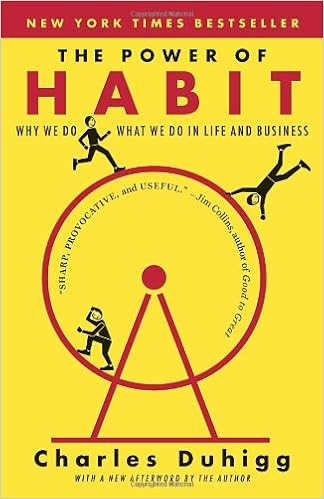
Book Review #77: The Power of Habit: Why we do, What we do in Life and Business By Charles Duhigg

Title: The Power of Habit – Why we do, what we do in Life and Business
Author: Charles Duhigg
Publishers: Random House
Year: 2012
Genre: Non-Fiction/Human Psychology
Source: Personal Copy

The book which explores the human habits and why it is called a habit after all. The author Charles Duhigg explains with various anecdotes from the scientific background, behavioral aspects and psychological aspects. The human habit is not something which will occur accidently, rather, it is a practiced phenomenon. This book explores this very idea of how the humans forms their habits, and the reason behind it and the inference of those habits.

This is an exceptionally written and researched book. It breaks those age old practices or the beliefs of "You can’t teach an old dog, new tricks”. Habits can be formed at any age and in any time, given, there is an enough room for acquiring the taste for it. This is really an important book and it can be used as a curriculum if you ask me. It has various examples from various cases studied for many years.

This book is mainly organized in to three different sections of habits. The habits of an individual person, the habits of an organization or a company and finally, the habits that propagates in a society that impacts the people on a larger scale. The case studies explained in every case is a testimonial of how the habits can truly become a game changer if we observe it closely. Thanks to the author. He has cleverly observed and recorded some events and cases where people can view a different angle of what the habits, why the habits and how the habits will occur and how to really change it!!

In the individual habits section, author had written an example of a person that was suffering from acute memory loss. This person went on to become famous as per those medical institutes that studied him over many years. This man was subjected to various experiments, practices and tests and recorded the results. A memory loss patient who cannot remember anything more than a minute or so, can truly practice some things repeatedly so that it can become his habits. A more of his case can be studied in the book.

In the organization example, Author had explained the cases of the famous toothpaste company Pepsodent and how this company went on to create a huge market for itself across the world, just by observing some habitual practices of people and changing the way it was marketed. People, who were not so confident about this product, has changed their minds and created a habit of brushing their teeth with Pepsodent. A more about this can be read in the book.

Finally, habits that changes the society. Author had used some of the famous examples from the American history to describe this section of the habits. The case of Montgomery bus boycott event has created a mass appeal among the people and it went on to create an important event in the history of America, drawing political personalities and other popular figures like Martin Luther King Jr. into the scenario. This case was explained brilliantly in the book and makes people to think about the habitual practice a society endorses. More about this can be read in the book.

All three section of habits draws a simple conclusion. The habits are formed in just a three step procedure. The “Cue”, the “Routine” and the “Reward”. Be it any habits like Smoking, Alcohol, Gambling, Marketing, Health care, etc... Etc… is formed in this three cycle of cue, routine and reward. For you to change any habits of yours and finding it difficult to break that cycle, Author had simply put in this amazing three sections to observe and change accordingly. Author has asked people or organization to not to change the Cue or the Reward. But, just change your Routines to achieve the same Reward. This is explained brilliantly in the following diagram.


A must read book for all those science enthusiasts. In fact, this book can be read by anyone who are in a dire need of changing their habits. It actually helps them to look deeply into their habitual routine and offers them to change a bit or two, so that, they can overcome those usual routines and achieve the same reward.

Few quotes from the book which I really liked:

“It is facile to imply that smoking, alcoholism, overeating, or other ingrained patters can be upended without real effort. Genuine change requires work and self-understanding of the cravings driving behaviors.”

“The Golden Rule of Habit Change: You can’t extinguish a bad habit, you can only change it.”

“…hiding what you know is sometimes as important as knowing it…”

“Rather, to change a habit, you must keep the old cue, and deliver the old reward, but insert a new routine.”

“This is the real power of habit: the insight that your habits are what you choose them to be.”


My Rating:
5/5

Saturday, December 27, 2014

Book Review #53: Doora Saridaru By Dr. S. L. Bhyrappa

After all, when it comes to philosophy based books, I will not be able to put down that. This book "Doora Saridaru" of Dr. S.L. Bhyrappa sir is a bundle of philosophical thoughts. Each character that the author created is a mountain of philosophical thinking. This novel mainly explores the idea of marriage, or we can put it as inter caste marriage and it also explores the requirement of right thinking or we can say as bonding between a girl and a boy before getting married, how this will affect a marriage etc... We can call this book as philosophy of marriage or literally philosophy of life. 
 
I really liked the philosophical ideas that the author has imbibed in all the characters. “Doora Saridaru” will be translated to English as “Moved Away”. Yes, this novel speaks about the couples who are yet to be married, but they decided they would get married. However, some unfortunate events will make it not happen. Reasons look very trivial for a normal novel reader. For a philosophy student this novel looks like an absolute profound experience. The thought that runs between each protagonist and the dialogue exchange between him and her is an awesome thought process.

The plot of the novel seems like a regular college love story. Sachidananda a studious young man who was studying English (Hons) degree finds a girl called Vinithakumari from his class who was very good looking and like him; she was pursuing her interests in literature and poetry. Soon, they will find interest in one another and expresses their love interest and it goes on like regular love stories. 

In another parallel story, a student called Vasantha a philosophy pursuing graduate and senior to Sachidananda. This Vasantha is a very introverted person. However, when it comes to debates and argument about philosophical subjects there is no one in the college who can match him except for a girl called Uma. She is Vasantha’s junior in the philosophy degree course and she was the one who can match to the qualities of Vasantha. As expected, some favourable incidents will make Vasantha and Uma to be another couple in the college.

As the story further progresses, there is a regular parental opposition to this marriage, there is disappointment, there are resentments etc... However, what I really liked about the novel is the after effects of the incident where their respective parents will oppose to these marriages. Vinitha’s mother rejected Sachindananda and Vinitha was not strong enough to oppose her mother. Sachidananda tried to convince Vinitha for a registered marriage. Even here, Vinitha was not strong enough to make a decision. She believed in philosophy of pain. She often told Sachidananda about how her suffering and pain will help to change her mother’s mind. Dejected by Vinitha’s decisions, Sachidananda will become a maniac, he loses his interest in life, he wanted to become a hermit, so, he leaves his house and goes to some hill station and tries to find solace for his burning soul. There he meets a sage or a person who renounced his life. This person has an important story in later stages of the novel. There he learns something better and decides to stay strong and he heads back to his home and concentrates more on his studies.

In another parallel story, Vasantha and Uma will participate in a debate about philosophy of truth and philosophy of marriage. There in one occasion, Uma humiliated Vasantha. She made his every argument very trivial and stupid. Vasantha decides immediately that this idea will not work in his life. He tries to convince Uma that, she would never argue with him once they get married. For which, Uma slowly said that, it is not possible but she will try her best. Therefore, Vasantha decides to postpone their marriage for about a year.

The real magic of the novel appears now, the huge philosophical thoughts of each protagonist comes into picture. Sachidananda decides to study like there is no tomorrow. He starts to pursue his master’s degree. Whereas Vinithakumari decides to drop out of college and she starts to work as a schoolteacher. Vasantha decides to pursue his PhD and Uma decides to work for an NGO. Will these couples get married or what role the fate will play in these lives? I stop at this point and let the readers go through the book and find out the answer! 

I recommend this book to everyone and for those who are students of philosophy or interested in learning about philosophy. It is a classic attempt by my favourite author. 

My Rating:
5/5

Monday, October 27, 2014

Book Review #43: The Fountainhead By Ayn Rand

There are books that are hard to read. There are also few books that are hard to review. And, there are books, which fall under both of these categories. The Fountainhead by Ayn Rand is one of such important books to the mankind. I may be exaggerating a bit here, but, let’s give it to the author for writing this magnum opus. It is a treat to read this book. It can be easily declared as a must read book before you die!!

The summary as given in the back page of the book goes like this:

“This instant classic is the story of an intransigent young architect, his violent battle against conventional standards, and his explosive love affair with a beautiful woman who struggles to defeat him.”

What I really liked about this book? Is it the philosophical thoughts? Or is it the fight of a relentless stubborn architect? Or is it the unusual romance between the protagonists? Or is it the life lessons? It is extremely difficult to come up with the answers. I liked all these thoughts that bundled up in this book. It seems very difficult to understand it at the beginning, but, as the book flows through the pages, it is overwhelmingly awesome. It covers everything. The Architect, The Press, The Love story, The betrayals, The deceiving characters, The forgiving characters, etc…

At times you may feel like you are not able to continue to read. But, reading this book requires a lot of patience according to me. It takes at least 2 weeks to finish reading it, if you are reading few pages a day.

The book mainly talks about 4 main characters. Peter Keating (A confused Architect), Ellsworth M. Toohey (Guy who wants to control everything but wants to remain as a shadow), Gail Waynand (A conglomerate tycoon) and our hero of the novel Howard Roark. 

The book starts very slowly and takes time to sync in the readers mind. Slowly it occupies your mind and crumbles up into your dreams when you read it. The ideology presented in this book requires a great deal of concentration to read it and understand it. Each dialogue, each prose, each verse is heavily loaded with philosophical thoughts. Every character seems like a mountain of philosophical aspects.

The Fountainhead is written with great eloquence. It is lucid and engaging. It is loaded with the power of wisdom. It you can read it carefully, you will slowly realize the meaning of the all those 4 different characters, developing them with the intense clarity, so much so that, you are left feeling pity for everyone but the hero.

Howard Roark is an unbelievable character. His ruthless yet calm nature fascinates anyone. His tranquilizing demeanor and the aura which he carries around himself is seldom unnoticed. Even after fighting for his existence, he never allowed himself to be robbed by anyone intellectually. He constantly reminds us of the nature “My way or Highway”. He is adamant, fickle minded yet he is a hero. He takes his fight against the world that is still not out of conservative orthodox thinking. When the whole world is against his modern viewpoints, he stood for his convictions and proved what he is capable off. It is such a joy to read the dialogues of Howard Roark. He reminds every one of us on how to live life on own terms. If we all look back into our lives, we lived all of our life living for others, working for others, satisfying others. Howard Roark conveys his message clearly that, live your life that way you want it to be. “Those who mind, don't matter and those who matter, don't mind” kind of attitude is the take away from the book.

Overall, The Fountainhead speaks of one main thing throughout the novel. It is “Individualism”. No matter what happens tomorrow, if you can prove your individualism then it’s the greatest achievement one can achieve in his lifetime. I recommend this book to everyone. It is once in a life time opportunity to get lost in the philosophical thoughts. You would certainly enjoy each page.

Rating this book is beyond my abilities. Anyways, 

My Rating:
5/5

Tuesday, September 30, 2014

Book Review #38 - Who Will Cry, When You Die? By Robin Sharma

I generally don't read self-help books. But, this one book made me to read more of such books. Thanks to the author Robin Sharma. It didn't really transform my life in overnight, rather, it did allowed me to sit and introspect a bit on what I might be missing in life. This book is something that reverberates in your mind for a long time, leave alone giving you an idea of what's most important.

I really loved the title of the book. In a moment you all want to read this book. Who Will Cry When You Die?. A question that everyone must ask themselves when they are alone and contemplating about life and its oddities. Robin Sharma had clearly articulated in this book, the 101 'Life Principles'. Is it just 101 or much more? To answer this, there are more to what Robin Sharma had tried to give to his readers.

The entire book is just about those small changes that we can apply to our lives to bring that happiness that we always longed to bring or see. Collection of these thoughts what makes this book as an unique and inspiring. You may wonder while reading this book, why didn't I realized these trivial things all these days? Well, we are too much deep in our materialistic desires and never in any given day has given thoughts about these.

This book is just about realizing what makes us more happy and less resentful. Robin Sharma had explained in a simple but elegant manner. Author had covered every little details ranging from waking up early in the morning, to have a nice family outing, to have a collection of our favorite books, to see that one life changing movie or to have a gala time with our kids till some of the serious topics like why doing meditation is a good way of silencing our chattering minds, why having a "lone time" is important, why should we start living our day like its our last etc, etc...

We all knew that these things are more important in our life, but, we haven't given a much thought about it. From this book, what you learn is an art of living and an art of dying as well. We are living our life trying to achieve something we don't really like to show off to some people whom we really like. If those people like you really, they allow yourself to get something that makes you live as yourself. Though I don't really say that, materialistic success is not required, I am only asking to not consider those as the real success. There is something beyond in everyone's life that we are failing to appreciate. Well, this book just gives you an idea of finding those somethings and make your life more meaningful.

Robin Sharma regularly uses famous quotes in all his books. That adds more meaningful messages to what he says. Even in this book you find ample number of quotes that adds more color to the book. I really liked this particular quote:

"When you are born the World rejoice while you cry. Live a life in a such a way that when you DIE, the World should cry and you rejoice" - Sanskrit Saying

I recommend this book to be read by everyone. Though it may not bring overnight changes to your life, but, surely, it evokes some questions that every readers can questions themselves.

My Rating:
5/5

Wednesday, September 17, 2014

Book Review #35: The Book of Secrets - Unlocking the Hidden Dimensions of Your Life By Deepak Chopra

This is a nice book on self-realization. I did not say it is a self help book, solely because, it doesn't helps you to attain or achieve something, it actually helps you realize more of yourself. This is the first book of Deepak Chopra I have read. Without a doubt, I liked this book. He has written with much eloquence and I believe Chopra has achieved in what he was trying to say.

If you think this is a self help book, certainly it is not. I didn't consider it as one. This is beyond self help book. Though it has some exercise sections on what to do, how to do and stuffs like that. It actually helps you to understand more of you in every aspect of your life ranging from Mind, Body, Spirit, Spiritual, Relationships, Time, Death, Birth, etc...

I somehow sensed a feeling that, Mr. Chopra is teaching the Nondualism concept in every chapter. In Hinduism, this is greatly considered as the teachings of Advaita Vedanta a cult started by the famous 8th century sage or a monk or whatever you wish to call him, Adi Shankaracharya who helped the masses of those days to move towards non-dualism, which means, God resides in every being, there is no separate god and human in this world, there is only one thing, that is, the realization of god within one's own mind.

I sensed Mr. Chopra has written exactly the same thing leaving no stone unturned. With a touch of western oriented philosophical or spiritual mindset, he has given his readers, an exceptional piece of work in the name of Book of Secrets.

I really liked how he has organized this book. Every chapter reveals a secret of its own, leading a reader to attain a complete realization after each and every chapter. This particular book is not one of those books where you read in one sitting and forget and move on. Rather, it should be read slowly and be savoured with the flavor of Non-Dualism.

There is nothing to dissect in this review. I just give you the chapter names that explains all by itself.

The Mystery of Life is Real
The World is in You
Four Paths Leads to Unity
What You Seek, You Already Are
The Cause of Suffering is Unreality
Freedom Tames the Mind
Every Life is Spiritual
Evil is Not Your Enemy
You Live In Multidimensions
Death Makes Life Possible
The Universe Thinks Through You
There is No Time But Now
You Are Truly Free When You Are Not A Person
The Meaning of Life is Everything
Everything is Pure Essence

I guess you all had a glimpse of what Chopra is trying to say in this book. Though equipped with a fair knowledge of Non-Dualism, I had a feeling of revisioning everything again. Thanks to the author. This book certainly helps anyone, provided they must be ready to open up themselves to receive an unusual way of advice.

Some of the quotes that I liked from the book:

"If you obsess over whether you are making the right decision, you are basically assuming that the universe will reward you for one thing and punish you for another."

"Evolution is win-win…life is self-correcting."

"Pain is not the same as suffering. Left to itself, the body discharges pain spontaneously, letting go of it the moment that the underlying cause is healed. Suffering is pain that we hold on to. It comes from the mind’s mysterious instinct to believe that pain is good, or that it cannot be escaped, or that the person deserves it."

"Don't let a day go by without asking who you are…each time you let a new ingredient to enter your awareness."

"Meeting a stranger can be totally fleeting and meaningless, for example, unless you enter the individual’s world by finding out at least one thing that is meaningful to his or her life and exchange at least one genuine feeling. Tuning in to others is a circular flow: you send yourself out toward people; you receive them as they respond to you."

"Be content not with your lot in life but with being here in the flow of life. The glories of creation are in your very cells; you are made of the same mindstuff as the angels, the stars, and god himself."

"Don't follow someone else’s map. You should glean teachings from all directions, keeping true to those that bring progress yet remaining open to changes in yourself."

"The willingness to reach inside every part of yourself opens the door to total understanding. You place your entire identity on the line, not just an isolated part. This may sound daunting, but actually it’s the most natural way to approach any situation. When you hold some part of yourself in reserve you deny it exposure to life; you repress its energy and keep it form understanding what it needs to know."

Overall a good book with a new perspective. I recommend for everyone to read at least once in their lifetime.

My Rating:
5/5