Showing posts with label Battle. Show all posts

Wednesday, January 25, 2017

Book Review #105: Himalayan Blunder - The Angry Truth about India’s Most Crushing Military Disaster By Brigadier John Parashuram Dalvi Translated By Ravi Belegere

Title: Himalayan Blunder: The Angry Truth about India’s Most Crushing Military Disaster
Author: Brigadier John Parashuram Dalvi
Translator: Ravi Belegere
Publishers: Bhavana Prakashana
Genre: Military History/War
Pages: 500+ (Original Version) – 198 (Translated Version - Paperback)
Source: Personal Copy

This is the most chilling and humiliating account of India’s war with China in the year 1962. Famously known as Indo-Sino war or Battle of Thagla. Author Brigadier John P. Dalvi was the person who led his 7 Infantry brigade in defending the lands of India and eventually became the war prisoner of China. This book documents the anguish of a war hero that was treated lesser than a human being by the political leadership of India during 1962-63.

As per Dalvi’s account we get to read the most disturbing aspects of the dire military conditions of the India during that time. A belligerent army like India, though totally unprepared, has been ordered to throw the Chinese army out of the borders which India claimed was within the Indian boundary. The Chinese launched a devastating strike against India and occupied most of the territories and pushed back the Indian army within no time. Dalvi was an upstanding officer in the Indian army was firmly believed that China does not have any right over Tibet and that the McMahon line ought to be India’s north east frontier.

It was October 20, 1959, when Havaldar Karam Singh and his 20 strong troops doing their routine border patrolling when all of a sudden nine men from the patrol team were buried under in a matter of seconds in a hailstorm of bullets. Karam singh was taken as a war prisoner. This was the beginning of the Chinese aggression for the very first time; post their war with the Korea. Though it needed time to prepare for the war with India to claim few land areas, it was pushing all its limits to wage a fully fledged war against India. Whereas Nehru, the then Prime Minister of India was preaching the peace to the world.

The then Army chief Genreal Thimmayya’s fear about China stood confirmed. When he confronted the political leadership of the India and demanded the modernization of the army, V.K. Menon, the then Defense Minister of India plainly denied the request and asserted the problem with his own accord. He defended himself by saying; Pakistan is the “Number One” enemy of India and not China. General Thimmayya was amused and disturbed at the defense minister’s remark. Being an upright officer, he said what was bothering him...

“I understand our defense minister’s perspective. I have high regards for his abilities. But, I am aggrieved by his foolishness. One doesn’t rank his enemies as first, second and third. Perhaps, it is done in the communist countries and politics; as an Army Chief, I do not rank my enemies”

I will not be including the blow by blow account of Dalvi in this review. People can read this book. But wait… this book was shamelessly banned in the year 1969. Though there may be copies available in few numbers, what I read is the translated version of this book, penned by Ravi Belegere, a Kannada journalist and author.

Certain section from the book was really interesting to read. Dalvi’s description of the Battle of Tseng Jong, which took place 10 days before the Chinese assault on the Thag La. General Brij Mohan Kaul or B.M. Kaul had ordered 2 Rajput to move up Tseng-Jong and occupy the Yamatso La peak, 16000 feet above the sea level in full Chinese view with no artillery support. Dalvi convinced Kaul to move a patrol of 9 Punjabi to find a suitable crossing place for the Rajputs and cover them from a position at Tseng-Jong.  

A patrol of 50 men led by Major Chaudhary advanced to Tseng Jong. On 10 October 1962, 600 Chinese troops attacked Major Chaudhry’s patrol. It was obvious that they could not hold on for long, though the second Chinese wave was also beaten back, mainly on account of enfilade fire on the assaulting Chinese from the Rajputs hurrying up to Yamatso La. Major Chaudhry asked Dalvi for mortar and machine gun fire as a cover so that they could extricate themselves. Dalvi refused to order the guns and mortars at Bridge 4 to open fire.
The reasons given by Dalvi for his decision are interesting, but I’ll not detail them here. Please read this historical treatise from the book and find out Dalvi’s reasons. Dalvi says that 

“I and I alone, and are responsible for the decision not to allow the mortars and machine guns to open up”. 

Quite unlike BM Kaul who, when things turned bad at Tseng Jong told Dalvi,

“Oh My God! You’re right. China has prepared itself for a full-scale war. It’s each man for him from now on. You’re in charge of your Brigade. This is not in my reach. Only a Brigadier can execute this kind of war. This is your battle.”

And he turned and left, leaving Dalvi to helplessly watch the massacre of the whole platoon. Dalvi records several such incidents where a grossly under prepared Indian army faced the Chinese who were superior to them in every aspect. A most telling instance is

“…. a soldier saluted me as I stepped into the bunker and said, “Sahib, look there! The enemy is on the opposite slope. They’re burning firewood to beat the cold.” I felt a slap of humiliation. This was one of the rare instances this happened in thousands of wars throughout history. Burning a fire at night is a sure invitation for the enemy to attack. But then, this enemy on the slopes of the Thagla Mountain was confident: both of his strength and our sorry state. He knew for certain that we would not attack: we could not.
In his final journey, he pays homage to every person right from foot soldiers, majors, lance naiks, singnallers, doctors, brigadiers, commanders, his assistant staff, etc… who died defending the indefensible.

“The Chinese used the same war strategies in vogue for centuries but…. their guns were more modern, and their clothes were warmer than ours…. out there, away from the warm world, the October chill doesn’t descend from the skies; it climbs from the depths of the spinal cord. All our men had to wear were cotton clothes suited for summer, shoes which slide on snow… the only colour my men could see was the ash-white colour of death. A flash of sunlight was enough to blind them. This blindness caused several men to walk directly into the waiting arms of the enemy. My request for snow glasses was granted, all right, but when they arrived, the air-dropped bag dropped somewhere in the abyss-like crevices…and those snow glasses were broken into pieces which were not in a condition to wear. My soldiers were left to gaze those glassy snow with their bare eyes and went blind. During those times, without even realizing, my soldiers has walked into the enemy camps”

One must read this book to understand the shamelessness of the Nehru’s government, that failed to supply even the basic necessities like food, water, better clothing, shoes, goggles leave alone the artillery and ammunition. Towards the end, Dalvi and his remaining men went without food for more than 3 days. Without even having a map of route, they walked straight in to the camp that was wholly surrounded by the Chinese troops.

“We descended the Dhola Mountain after the Chinese disappeared from sight. We gave up the final hope of even sighting a small tukdi (regiment) of our men. I descended rapidly out of a sheer will to live. The slope ended in a forest…the path was even tougher to navigate. Meanwhile, I had lost four of the eleven men following me. I reached a clearing, which then led to a small mud road. It was all over.

Finally John P. Dalvi was captured by the Chinese army on October 22 1962, at 9.22 AM. He remained as a prisoner of war from October 22 1962 till May 1963. The book doesn’t record the event of what happened during Dalvi’s stay at the prisoner camp during those days. I guess this was carefully censored before release of the book. Anyways, the book itself was banned in 1969.

“We landed in Dum Dum airport in Calcutta on May 4 1963. We were received cordially, appropriately. But the silence there was disquieting. I realized later. We had to prove we weren’t brainwashed by Chinese ideology. We had to prove we were still loyal to India. My own army maintained a suspicious distance. The irony cannot be harsher: this treatment from a country, which for more than a decade had brainwashed itself into holding the Chinese baton wherever it went.

Himalayan Blunder has simply proven its contemporary relevance in the sense of history repeating itself: notice today’s Chinese cheerleaders who occupy disproportionate clout in the UPA government. By the way, the Battle of Thagla began on October 20, 1962 and lasted just over 3 hours, between 5 A.M and 8 A.M. An entire brigade was massacred. The history will never forgive Nehru and his coterie that paved the way for the most humiliating military disaster of Indian history.

My Rating:
5/5
Wednesday, March 23, 2016

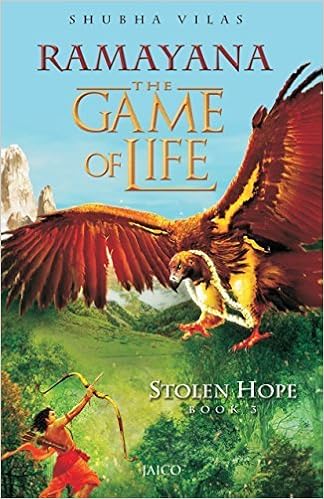
Book Review #81: Stolen Hope: Ramayana Series: Book #3: By Shubha Vilas

Title: The Stolen Hope (Book 3: Ramayana Series)
Author: Shubha Vilas
Publisher: Jaico Publishing
Genre: Mythology
Pages: 300+ (Paper bound)
Source: Review copy by the author


After receiving this book from the author for the review, I’ve thought for a while and purchased the first two books in the series (The Rise of the Sun Prince, and The Shattered Dreams) to get along with the plot and the subplots. Though as an Indian, I’ve known the entire story of the Ramayana and how it had happened by reading numerous books, this book series seems to be very specials regarding its authentic style of narration and the anecdotes, life lessons explained in every page of the book.

The book 1 explains about the birth and growth of the Rama as a toddler to a responsible scion. The book 2 explains the details about the decision of the King Dasharath to coronate Rama as the next king of Ayodhya, and the later events of Kaikeyi asking her two boons from the King Dasharatha resulting in the banishment of Rama to the exile for 14 years and Bharata to be made as a King of the Ayodhya, hence the dreams of the Dasharatha has shattered.

The book 3 begins from the story of the Dandakaranya where Rama, Sita and Lakshmana planned to spend their exile of 14 years. The journey of all three in the forest, their encounters with several rakshasas, and meeting several learned rishis like Agastya, and also the intervention of the Surpanakha and a small fun incident with her that turned out to be a major breakthrough in the story has been captured brilliantly by the author. The killing of Surpanakha’s cousins Khara and Dushana in an epic battle, and a beautiful narration of Rama meeting Shabari has been explained elegantly.

With a brief history of Ravana the story moves on stealthily and Rama is urged to go after the golden deer who is actually Maricha. Then Sita urges Lakshman to go after Rama despite of his unwillingness after hearing her husband's cry.

Ravana comes in form of sinister sage and he praises Ravana and belittle Rama, but Sita praises Rama instead which infuriates Ravana and he takes away Sita. Sita could only inform Jatayu about her abduction. Rama is informed about the abduction by dying Jatayu. Rama meets Shabri who tells them that only Vali can help him find Sita.

There is a short part of story from Lakshman's point of view too.

In-between the relay of the events, the author discusses and analyses certain acts of characters. For instance, at one place, Sita boldly reveals her mind to Rama about choosing the ascetic life instead of his bow and arrow, and immediately the next moment, she could not hold his gaze and begins to stare at her palms. That is, she feels guilty to have counselled Rama. Here the author discusses Sita's act of giving feedback as follows:

Does one have the right authority to give the feedback?
Even if one has the right authority, does one have the right motive to give a feedback?
Even if one has the right authority and motive, is it the right time, place and circumstance to give the feedback?

Although this story is written in parts, it doesn’t feel like it is limited to any particular storyline dividing the epic. The addition of little less important stories all along the way across the entire book has added much value as it would be very useful for the first time readers to obtain sufficient knowledge about the epic. The book is written in a gripping way that it is hard to keep it down, but it seems to be little bit lengthy as we tend to study each and every footnote at the bottom. But to a normal reader the footnotes would provide a Maslin of thoughts which will be forgivable for the length of the reading time.

This book is a must for the readers those who want to know about the Ramayana. Also the author has made this one to be a useful notes by sharing his wisdom and thoughts in every page. Further the summary of the books at the inception of the book makes it clear for the new readers that it’s not a must to read the other two initial books to get a clear view about this particular book.


My Rating:

5/5

Monday, August 25, 2014

Book Review #30: The Palace of Illusions By Chitra Banerjee Divakaruni

Who doesn't love Mahabharata ?? An epic of thousands of tales intertwined together in a mesmerizing story. And even more awesome feeling is, when you read the same Mahabharata story in different angles, different perspectives and different dimensions. All in all, a book which is certainly unputdownable. After reading many books on Mahabharata, especially after providing the review of Parva and Jaya in my own blog. I am here to give you all, yet another version of the tales of dice or simply the Mahabharata.

As the title of the book itself says, this story is all about the Illusionating Palace that Draupadi had dreamed off. The title is so apt for this book, since, the main theme of the book revolves around this palace. Divakaruni's attempt of narrating The Mahabharata from Draupadi's point of view is an excellent feat. Keeping Draupadi as the main protagonist of the novel, Divakaruni had achieved full effect the novel for what it meant to be. Loaded with heavy feminist viewpoint, you get to read the complete, different Mahabharata from Draupadi's point of view. Even arranging the chapter names is in a different style, as it is not numbered, rather, it is the theme of the story that she is narrating in that chapter. For example: Chapter name is Fire - it contains the Yagna that Dhritarashtra performs in the name of Rajasuya Yaga.

I am not going to give you all a review of Mahabharata here. That has been told many times over and over again. Here I will highlight the events and actions that unfolds through the eyes of Draupadi.

What was much fascinating was, Divakaruni's attempt of picturising Draupadi or Panchaali (The way she expects everyone to call her) is vivid and full of surprises. Draupadi also enjoyed the name "Sakhi" and "Krishnaa" (the female version of krishna) when Krishna used to call her. Draupadi's childhood is not a regular childhood of any little girl, since, it follows a different route. Draupadi, who was raised by his fond Dhai Ma, had a different view of the world such that, she always opposed the ritual of Women were not allowed to enter the Royal Courtroom, Women were not supposed to study after a certain point, Women had no choice of her own while selecting her groom (Yes, the Swayamvar!!), etc. etc..

Throughout the novel, we can get to see the lost love of Draupadi for Karna. Draupadi always longed for the love of Karna, which is not by compulsion, but by pure love. She had admonished him in the Swayamvar proceedings of his lower birth, not knowing Karna's true birth!!. Almost in every chapter, Draupadi's love for Karna is described very passionately, which is a must read from the book.

Without forgetting, having married off to 5 Pandava brothers, Draupadi had her share of fight or rather doubts against Kunti, her mother-in-law. She had to start her daughter-in-law life afresh in the new house, adjusting to the environments, getting along with people,etc.. You will sure enjoy the regular SAAS-BAHU cat-fights from this novel. When Draupadi learns that, Kunti had approached Karna to reveal his true birth and offered Karna to becomes the Sixth husband of Draupadi, towards the end of the novel!, Draupadi loses her cool and was about to shout at Kunti for not bringing this to her notice!!. This is for sure a spiced up story to read from the book.

What at all a review, if I do not bring the Palace of Illusions ??. This is the main theme or crux of the novel as I said before. What follows after their lac house was burnt and they get their share of barren land Indraprastha to start a life. Pandava's had called Maya to construct a beautiful palace that was never done before and will not be done after. As expected from this women centered novel, Draupadi becomes the chief architect for planning and suggesting what and all to include in this palace. The pillars, The waterfalls, The fish ponds, The rooms, The walls, The paintings, etc.. Everything was done according to Draupadi's instructions, which is the sole reason or the stepping stone for the entire Mahabharata. When Pandava's invited Kaurava's to visit their palace of Illusions, with much to the dismay, when Duryodhan accidently steps on to a pool which was looking like a glass floor, followed by Draupadi mocking him in front of her maid-servants, that led to the game of dice, followed by War of Kurukshetra is all a regular telltale!!.

Surprising stuff which I believe is that author's brought up story is, Draupadi had a boon from Sage Vyasa that, she can visualize the happenings across a far away place. When she was younger, Vyasa had already informed her that, she will be the main reason for thousands of deaths, also, she will get married to 5 brothers, etc.. Even in the war of kurukshetra, Draupadi already knew who Karna was, and she was tempted to reveal this to her husbands, which she didn't do, since, Vyasa asked her not reveal anything until what he wrote already must happen. 2 things we must notice here, First Vyasa giving boon to Draupadi to visualize future but not to reveal anything. And Second, Vyasa had wrote the Mahabharata much before it took place ?? (This is sure a debatable topic)

Towards the end of the novel, all Kaurava's side have been killed and Pandava's side have ruled for several years and it was time to take up the vanaprashta-ashram. 5 brothers along with Panchaali heads towards Himalaya that ascends to the greater heavens. The struggle and the hardship that Draupadi goes through this phase is a treat to read from the book. Because, Dhritarashtra had told his brothers that, none of them will help anyone if they fell down while ascending the himalayas. So, as foretold by the oracles, Draupadi falls much before. But to our surprise, Divakaruni had brought Krishna in this scene, who will lead Draupadi into the safer heaven.

Overall, a fresh aspect, a bold attempt of Mahabharata or I can call it as Panchaali's Mahabharata!!. A section of Krishna teaching Bhadagawad Geeta to Arjun was kept bare minimum, which should've been extended a bit further. Other than that, a must read book for all those historical fiction buffs.

My Rating:
5/5