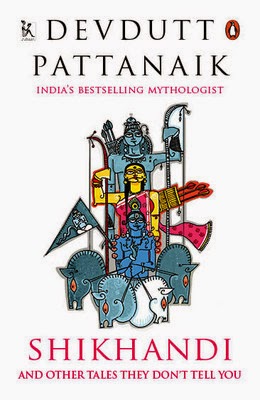
We all love this elephant headed god, aren't we? He is by far the most
loved and respected God throughout India. He is worshipped by each and every one
without any religion hindrance. His stories would always fascinate anyone.
Probably he is the cutest God that was loved by everyone regardless of the age
or gender.
Pattanaik, by now, one of my favorite mythology story tellers, had
done ample research before penning this book. His anecdotes are very impressive
pertaining to the information he has provided in this book. Though it’s a short
book spanning over 160 odd pages, it has everything to know about Lord Ganesha.
Even after having known so many tales and information about Ganesha.
What makes this book unique is the extra mile that the author has gone to garn
more interesting details and connecting the dots together. Who is Ganesha? What
is his background? What makes him so special among the Indians and particularly
Hindus? What are the tales behind Ganesha getting the elephant head? What occasion
made Lord Shiva to behead Lord Ganesha? Why he has been referred as the
obstacle remover? What’s the story behind people chanting Ganapati Bappa Morya?
The questions never stop right? Well, if you are finding it hard to get all
these information, then this book is the one stop solution to all your doubts. It
is rich and resourceful to know about God Ganesha. I must admit that, I had
come to know many tales which I never came across all these years.
Like his many other books, Pattanaik has juxtaposed the modern day
rituals that can be directly linked to the mythological tales and symbolism
with respect to Ganesha. I liked how he had narrated the details that go from
India, Thailand till Mongolia. We all know the regular tale behind Ganesha’s
elephant head. But Pattanaik has given us few other tales and folklore beliefs
behind this story.
What I really liked about this book is, Ganesha that riding on a
peacock. Peacock is called “Mor” in Hindi. Thus, it makes clear for the readers
that, why people chant, “Ganapati Bappa Morya”. He also mentions about the race
between Ganesha and his brother Kartikeya. This race was set up Narada Maharshi
to see who has more wisdom and who can think profoundly. Well, Ganesha having a
Mouse as his vehicle couldn’t race with his brother Kartikeya who had a flying
peacock as his vehicle. So, Lord Ganesha decides to walk around his parents
Lord Shiva and Goddess Parvati symbolizing them as the whole universe, thus displaying
the profound thought. This was a good takeaway from the book.
At the end of the book, author Pattanaik has given a list of popular
Ganesha temples across the world. He explained the probable reasons behind
why these temples marked as a prominent place of worship. He also explained the
different names of Ganesha and its meaning. One such example is “VINAYAKA”, meaning one who was born
without the help of a male companion (In Sanskrit VI means “without” and NAYAKA
means “male person"). Thanks to the author for explaining something which I was
not aware of. The explanation for the Ashta
Vinayaka is a fantastic section from the book.
Pattanaik doesn’t forget to mention about the freedom fighter Lokamanya Balagangadhara Tilak who made
Ganesha Chaturthi as a public festival. This particular movement has combined
people from different walks of life, thereby giving the required momentum for
the India’s Independence movement.
I recommend this
book to every reader that wants to learn more about Lord Ganesha. May the
blessings of Lord Ganesha bestow upon you.
“Om Gam Ganapataye Namaha!!”
My Rating:
5/5