Showing posts with label Psychology. Show all posts

Tuesday, November 22, 2016

Book Review #93: Thinking, Fast and Slow By Daniel Kahneman

Title: Thinking, Fast and Slow
Author: Daniel Kahneman
Publishers: Penguin
Genre: Non-Fiction/Decision Management/Cognitive Psychology
Pages: 512 (Paperback)
Source: Personal Copy

How often do we really think we are making the right decision? Or, do we really think that whatever we have assumed or professed as true indeed? What about all those decisions we have made all these years? Does it always make us more contented that we’ve made them or was there any slight doubt that we would’ve thought a moment before we made that decision? Does being regretful is anywhere related to the decision we make or does that not at all related to our thinking minds? There are thousands questions for a questioning mind when you begin to read this book. In first few pages itself all our so called beliefs that we held dear to us all these years will be shattered brick by brick. That doesn’t mean that, this is a book that changes your thinking overnight and you can be more assertive and cognitive in an instant.

A book like “Thinking, Fast and Slow” is not a one time affair to read end to end. It has more to do with the assessing our minds in each page we turn. The decisions we make consciously or unconsciously have a profound impact on the overall journey of our life. Daniel Kahneman, a Nobel laureate, has crafted a well analyzed, well researched, well documented book. Each and every experiment or survey that he has conducted throughout his life about decision making, cognitive assessment, character forming, opinions that we have on all and sundry has been articulated exceptionally in this book.

One such example where I liked the most is, when the author and his associates conducted a survey on “was Gandhi older or younger than 144 years when he died?” Obviously, the answer the public gave was less than 144 years. When the same set of people asked a different aspect of this question like “how old they thought when Gandhi died?” and this time people picked up the answers as between 80’s and 90’s. On the next attempt when the people were asked “if Gandhi was older than 44 when he was died?” the expected answer was older. When he asked “how old Gandhi was when he died?” most of the people picked up the answers in late 50’s and 60’s. This particular experiment shows that, people tend to come up with their own set of beliefs in answering a question that had nothing to do with the reality and certainly had no impact on their choices. This is just a tip of the ice berg when it comes to convincing people. The people at marketing department knew the nerve of people and they try every way to manipulate its target customers by feeding information subtly and manipulate them into making decisions in favor of them.

There are sections from the book where the author deals with the concepts of forming an opinion on persons. What do we really think when we decide about a person as so and so? Do we really care about going to the deeper level of research before deciding the character of a person or do we just form an opinion with the vague information that is available before us? One such example that we can read from the book is about a female who is banker and a feminist. So most of the opinions formed on this particular case are, either the woman is a banker or a feminist. The question of she being a feminist banker seems an absurd opinion. But why do we make such assumptions? What runs in our mind when we read bits of information on a person and we have a picture of themselves with all the characters that we assumed that fits into that person? Author expressed his opinion that, most of us will use limited information to make decisions on someone. The questions we ask ourselves most of the time is, “Can we trust them?” “Are they friendly enough?” “Are they going to be a good human being?” “Are they competent enough?” etc…

This brings us to the main argument. Are we really making our decisions emotionally rather than rationally? Author explains in simple two system concept. System 1, in which a person reacts to almost everything instantly. It is devoid of mind body co-ordination. This is explained with a simple 2X2 multiplication. And, there is System 2, which is more rational and laid back. It never responds to events in a jiffy. It consents our mind before blurting out the response. A simpler example to this is, computing the results for 17X34. System 2 always monitors the System 1.

In conclusion, reading this book has shaken me greatly. I am convinced by the vast amount of research work about the psychology of the decision making that most of my choices so far in life have been taken without having a second thought. “What if?” reactions were always ringing in my mind while I was rummaging through the pages. Taking a decision in haste and try to rationalize it later is what we have practiced in all our lives. We try to come to terms with it than to analyze in the beginning.

Author was right on when he convinces his argument that people are incredibly quick to jump to conclusions, make decisions without enough information, and have their decisions greatly influenced by the bits of information they have in their hands. This book will certainly makes you think twice about how you make the decisions. Slowing down the process and thinking right is the one take away from this book while you read and savor it.

My Rating:
5/5 

Tuesday, September 15, 2015

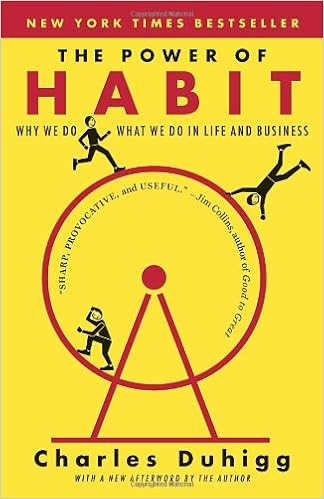
Book Review #77: The Power of Habit: Why we do, What we do in Life and Business By Charles Duhigg

Title: The Power of Habit – Why we do, what we do in Life and Business
Author: Charles Duhigg
Publishers: Random House
Year: 2012
Genre: Non-Fiction/Human Psychology
Source: Personal Copy

The book which explores the human habits and why it is called a habit after all. The author Charles Duhigg explains with various anecdotes from the scientific background, behavioral aspects and psychological aspects. The human habit is not something which will occur accidently, rather, it is a practiced phenomenon. This book explores this very idea of how the humans forms their habits, and the reason behind it and the inference of those habits.

This is an exceptionally written and researched book. It breaks those age old practices or the beliefs of "You can’t teach an old dog, new tricks”. Habits can be formed at any age and in any time, given, there is an enough room for acquiring the taste for it. This is really an important book and it can be used as a curriculum if you ask me. It has various examples from various cases studied for many years.

This book is mainly organized in to three different sections of habits. The habits of an individual person, the habits of an organization or a company and finally, the habits that propagates in a society that impacts the people on a larger scale. The case studies explained in every case is a testimonial of how the habits can truly become a game changer if we observe it closely. Thanks to the author. He has cleverly observed and recorded some events and cases where people can view a different angle of what the habits, why the habits and how the habits will occur and how to really change it!!

In the individual habits section, author had written an example of a person that was suffering from acute memory loss. This person went on to become famous as per those medical institutes that studied him over many years. This man was subjected to various experiments, practices and tests and recorded the results. A memory loss patient who cannot remember anything more than a minute or so, can truly practice some things repeatedly so that it can become his habits. A more of his case can be studied in the book.

In the organization example, Author had explained the cases of the famous toothpaste company Pepsodent and how this company went on to create a huge market for itself across the world, just by observing some habitual practices of people and changing the way it was marketed. People, who were not so confident about this product, has changed their minds and created a habit of brushing their teeth with Pepsodent. A more about this can be read in the book.

Finally, habits that changes the society. Author had used some of the famous examples from the American history to describe this section of the habits. The case of Montgomery bus boycott event has created a mass appeal among the people and it went on to create an important event in the history of America, drawing political personalities and other popular figures like Martin Luther King Jr. into the scenario. This case was explained brilliantly in the book and makes people to think about the habitual practice a society endorses. More about this can be read in the book.

All three section of habits draws a simple conclusion. The habits are formed in just a three step procedure. The “Cue”, the “Routine” and the “Reward”. Be it any habits like Smoking, Alcohol, Gambling, Marketing, Health care, etc... Etc… is formed in this three cycle of cue, routine and reward. For you to change any habits of yours and finding it difficult to break that cycle, Author had simply put in this amazing three sections to observe and change accordingly. Author has asked people or organization to not to change the Cue or the Reward. But, just change your Routines to achieve the same Reward. This is explained brilliantly in the following diagram.


A must read book for all those science enthusiasts. In fact, this book can be read by anyone who are in a dire need of changing their habits. It actually helps them to look deeply into their habitual routine and offers them to change a bit or two, so that, they can overcome those usual routines and achieve the same reward.

Few quotes from the book which I really liked:

“It is facile to imply that smoking, alcoholism, overeating, or other ingrained patters can be upended without real effort. Genuine change requires work and self-understanding of the cravings driving behaviors.”

“The Golden Rule of Habit Change: You can’t extinguish a bad habit, you can only change it.”

“…hiding what you know is sometimes as important as knowing it…”

“Rather, to change a habit, you must keep the old cue, and deliver the old reward, but insert a new routine.”

“This is the real power of habit: the insight that your habits are what you choose them to be.”


My Rating:
5/5

Wednesday, July 8, 2015

Book Review #72: Crime and Punishment By Fyodor Dostoevsky

Title: Crime and Punishment
Author: Fyodor Dostoevsky
Publishing Year: 1866
Genre: Philosophical Fiction/Classics
Pages: 570+

Let me begin my review with two quotes about redemption…

“Redemption is not a favor, it’s a reward!!”

“True redemption is seized when you accept the future consequences for your past mistakes!!”

Fyodor Dostoevsky’s Crime and Punishment is a story of redemption and liberation through a rare form of suffering. Extreme form of suffering generated by the protagonist’s destructive thoughts. The heart wrenching novel that explores the human soul’s susceptibility to sin and regret.

This book is brilliant, intelligent, cleverly written and it keeps engaging its readers through the page one till the end. We had to accept the fact that, this book is not a “light” read. It tests your patience like anything else. At times you feel like you had to give up reading this and there is no way you can decide to do that. The theme of this novel seemed like Crime (which is murder) and punishment in the most generally understood terminologies. No, it is not.

Raskolnikov, our protagonist in this novel and his arrogance in placing himself above his other counterparts and thinks he is of the same elite personality as that of Napoleon. His feelings or his opinion on certain matters has taken its toll and he brought himself in the most unimaginable situation in this story, which he regrets, at the same time enjoys, from his own standpoint. Raskolnikov is a conflicted character; he is showing a lot of interest in the classes and thinking he is of a higher class than others believes he has the right to commit murder. Contrary to the title, this novel doesn't really focus on the crime or the punishment but rather the inner turmoil of Raskolnikov as well as the impact on his intellect and emotions. It is not until the very end that the sense of guilt overwhelms him and he confesses and ends his alienation.

This novel is certainly about the psychology of a crime and the punishment it measures. But more than that, the novel features exceedingly contrasting views. These views, contrasting and even paradoxical, can sincerely confuse a man. But, these seemingly contrasting views when scrutinized are really just the product of a struggle inside a man's very being. His final struggle of whether to finally detach himself from society, from life, from his humanity, or to finally succumb to it.

Raskolnikov is one such a man who didn’t care if he died, didn't eat, didn't care about his illness and yet coward enough to commit suicide. He is enjoying this rare form of suffering or we can call it as a delirium? Anyways, he commits two murders without knowing the consequences or was he prepared for everything? That’s least bothering point. At times he was being suspected of the crime and several police officials confronted him and inquired him. But, Raskolnikov was simply denying everything, but deep inside his heart, he knew that he was the one. He knew that, today or tomorrow he had to succumb to his punishments.

The novel begins in two separate tracks, one following the inner turmoil of a murderer and the other chronicling the melancholic destruction of a family due to a flighty, alcoholic patriarch. Dostoevsky deftly weaves together a multitude of unforgettable characters as they interplay through their tangle of plotlines. Each character is carefully balanced with their foil, each character is written with their own unique style of speech and language, and the novel seems to tie every thread together with such perfection and care as it churns forward, raining destruction on the lives of its characters to bring them toward their own personal redemption or demise. 

There are many characters in the book which is equally important as Raskolnikov. Especially Mr. Razumihin. He is a man of good heart and he is deeply interested in helping Raskolnikov and his family. He often went and arranged everything to defend his dear friend Rodya a.k.a. Raskolnikov. He eventually marries Dounia. That’s sort of a relief from this novel. The character Sonia Sofya Semyonovna is also a role to be remembered for. She has suffered equally as that of Raskolnikov. Only thing is, she didn't commit any murder. Rather, she has sacrificed herself for her family and her siblings. Raskolnikov was deeply moved by the affection that Sonia had expressed for him. He felt, at last that, he had loved her. Sonia took all those pains and sufferings and moved to Siberia in order to be with him, visiting him during those punishment years, eagerly waiting to start her life with Rodya altogether anew.

Over a century has passed since its initial publication, yet Dostoevsky’s message is still as poignant today as it was when it was first inked onto paper. Crime and Punishment features an immensely engaging blend of intrigue; philosophy; political, social, moral and religious commentary, that all thread together to create a masterpiece of literature that captures the deep, raw core of the human condition when it is at its most gruesome and vulnerable. The exquisite literary genius of the novel evoked a strong emotional resonance in me and the timing of my reading was just right to forever wed me to my love of books.

Conclusively, a fantastic book and it is highly recommended from my side. If you are a true reader and have an adjective as voracious, you must read this book once in your life time.

As I end my review, I have some excerpts from the book which I think it is worth mentioning in my review:

"Go now, this minute, stand in the crossroads, bow down, first kiss the Earth you've defiled, then bow down to the whole world, on all four sides, then say aloud to everyone: 'I have killed!' "

"Accept suffering and redeem yourself by it, that's what you must do."

"He went on down the stairs and came out in the courtyard. There in the courtyard, not far from the entrance, stood Sonya, pale, numb all over, and she gave him a wild, wild look. He stopped before her. Something painted and tormented something desperate, showed in her face. She clasped her hands. A hideous, lost smile forced itself in his lips. He stood a while, grinned, and turned back upstairs to the office."

"But all at once, in the same moment, she understood everything. Infinite happiness lit up in her eyes; she understood, and for her there was no longer any doubt that he loved her, lover her infinitely, and at last the moment had come... " 

My Rating:
5/5

Friday, January 16, 2015

Book Review #56: Everett By Jenifer Ruff

Title: Everett
Author: Jenifer Ruff
Publisher: World Castle Publishing LLC
eISBN: 9781629891439
Genre: Psychological Fiction
Pages: 237
Source: Review Copy

There are few books that take its readers like free flowing water. This exceptionally awesome book Everett by the author Jenifer Ruff is beyond your expectation. I actually felt like I am watching a suspense filled psychological movie by sitting at the edge of my seat. I am not exaggerating here, but, I really loved this novel.  After reading many psychological based stories, this book has kept me hooked till the end.

The plot of the novel looks very simple at the beginning. Everett is the name of the college where our protagonist Brooke is studying. Author had done a great job by introducing Brooke's character to the readers slowly. Brooke is a very silent, nerdy and a fitness freak girl. She enjoyed her regular fitness classes as much as she enjoyed her college classes. In fact Brooke was one of the fitness instructors from Everett. Brooke had a boyfriend called Ethan that had relatively a lesser role to play in this novel except on few occasions. Brooke had fewer or no friends at all except for Ethan; this was due to her tight schedule that was filled up with college classes and her fitness classes.

Brooke had a very strange and unusual characteristic that will be revealed slowly in each chapter. I really appreciate the author to write such an unusual introduction to the dark side of a protagonist!! Brooke was one of a kind, and she never feared for something to experiment on her own. She expressed her interest of going to medical school and become a surgeon with Ethan. During one of her meeting with Ethan, Brooke slowly opened up herself and explained how she wanted to become a surgeon and explained the story behind it. It was one of the awful experiences for Ethan, since; Brooke was actually explaining about her surgical tryst with a dead cat!!! May be this incident lets the reader know about the dark side of Brooke.

Brooke's unusual style of looking at things was not new. During her childhood she had dissected enough animals to know it better. But all these events made her a pure psychotic. Brooke's one of the weird wishes was to dissect a person to check out their heart and study them. Her psycho activities were witnessed when she drove her dorm mate Jessica's car and vandalized without having a second thought.

The climax of the novel is very surprising. The ending is where the pure psychological traits of Brooke will be revealed. Brooke actually commits a murder of someone that is very close to her and instead of getting scared she was so elated to dissect the dead body in an isolated place. But due to heavy storm and snow fall outside, she had no option but to dispose the dead body. But will Brooke get caught? Will she get punished for her crime? What was her thoughts after committing all these crimes? Will her college authorities ever discover about Brooke's real character? The answer lies in the book. I am highly recommending this novel to all who wants to read a marvelous psychological story.

This book will not be the end of Brooke's story. Author had written a sequel for Everett and its called Rothaker which will be out soon.


Buy this book from Amazon
My Rating:
5/5

Thursday, July 17, 2014

Book Review #24: Anchu by Dr. S.L. Bhyrappa

This is yet another masterpiece novel by my favorite author, Professor, Thinker, Philosopher Dr. S.L. Bhyrappa sir. It is amazing to think that, how he could possibly be able to capture such thinking and ideologies under a single book. Then it struck me like a jolt, this is the theme of all Dr. SLB sir's books. No wonder, the immense feeling I got while reading this book is beyond explanation.

This is a profound book, making the readers to go beyond the material relationships and arrive at a conclusion. Detractors can always bang their head against the wall, but, they can't deny the fact that, this book makes everyone, literally everyone, to think for a minute or two about their own lives.

This book mainly revolves around only 2 persons. Though there are other filler characters for the sake of the novel, readers are not much bothered about those characters. The protagonists of this novel is enough to carry out the story. This book is certainly unputdownable. It takes the readers on a ride, the psychological ride that anyone could imagine. It takes only a man like Dr. SLB sir to write such books.

The plot of the novel introduces us to the main protagonists of the novel. A well educated woman, Dr. Amrutha, a Ph. D. scholar and a lecturer in a college. Though she had a good job to support her, psychologically she is a woman of suicidal tendencies. She was deceived by her own family members, by her husband and her aunt. By their dubious coup, she lost all her properties and she was thrown on the road along with her two small kids Vijay and Vikas. She and her kids lived alone in the house that was left by her father years back.

Another protagonist of the novel is Somashekar, an Architect by profession, who is well settled and came to Mysore from Mumbai in search of expanding his Architect business. He is good at heart and an honest person, but, he is too weak to express his feelings. That leads him to a bigger mess in his life. Having lost his wife and a daughter, and a failed relationship in his mumbai days, he had no plans of another relationship and was quite happy with his job.

The phase that connects these 2 protagonists is a situation, where Dr. Amrutha calls Somashekar for an urgent repair of her house. He finishes of this repair job and finds himself attracted to this woman. She also had the same feelings towards him. As the story continues further, these two persons were found out that, they love each other and finds a new ray of silver lining in their respective lives. Their love story continues just like any other love stories. But, her suicidal tendencies and mood swings makes both of their lives difficult at many stages.

Author had brilliantly imagined the psychological imbalance state of Amrutha. She is happy at sometimes and in split seconds she gets this immense feeling of loneliness. Everyday she decides to take her life and writes suicide notes and takes her revolver and heads to a hill station and within no time she decides not to do so. These events had made her traumatized everyday. Somashekar feels that, he needs to take care of her and he supports her in every possible way. He changes his timings of work just to be with her. At some point in the novel he was succeeded in changing her mind to concentrate on future rather than taking life.

There are few stages in the novel, where both of them quarrel and decides not to see each other again. Later, they finds their lives are even more empty and dull, which leads them to concile again. As the story further reveals, Amrutha finds out that she is carrying the child of Somashekar. For which, She felt very guilty and again she decides to take her life. But due to the intervention of Somashekar, this plan was failed. Later, she decides to get aborted and still she finds her life pointless, aimless and meaningless.

As the book reaches its climax, Somashekar encourages Amrutha to file a lawsuit against their Aunt and relatives to take back all the properties that was belonging to Amrutha. Also, he gives timely suggestions on how to handle this case. Amrutha slowly recovers from her traumatic stage of her life and finds a new hope for her life. She fights the case with all her might and wins the lawsuit against her aunt and relatives. As the climax approaches, Somashekar feels that, he should marry Amrutha and accept her two kids as his own kids. For which she agreed.!!

The story seems very simple and straightforward. In reality, it is impossible to express how does one feels when someone was deeply wounded psychologically and how their behavior will affect their loved ones and surroundings. This is the crux of the novel and one should read it to experience it. Readers are hard pressed for words to describe the state of Amrutha and her waves of thinking in the book. It is best not to mention in this review. Overall, a must read book, it actually changes one's behavior and thinking.

My Rating: 5/5